
Readers Submissions
Democracy Under Threat: Silence, Fear, and the Cost of Political Dependency
Submitted on: September 2, 2026
Submitted by: anderson connell
Democracy Under Threat: Silence, Fear, and the Cost of Political Dependency
Recently, at the church service marking the 71st anniversary of the Democratic Labour Party, Reverend Monrelle Williams made a timely and necessary intervention. He warned that, in the absence of an effective Opposition, any government is prone to do as it pleases. He further reminded the congregation that leadership is not about one person dominating others, but about people working together for the good of the country.
His message was clear: citizens must speak out. If they do not, the pain and misery now being experienced by many Barbadians will continue.
That warning should not be taken lightly.
Two years ago, some Barbadians came to the defence of Marcia Weekes, the popular and fearless filmmaker and podcast host, after she became the subject of public attacks by persons aligned with the governing narrative. Some suggested that she should return to her native Jamaica. That attack was not merely personal; it was political. Ms. Weekes is not only the holder of a Barbadian passport, but also a Caribbean citizen with the right to live and work in Barbados.
The irony was striking. While some sought to silence her by questioning her belonging, the Government was simultaneously preparing the way for other Caribbean people to visit and live in Barbados without a passport. The contradiction exposed the real objective: not immigration control, not national protection, but the attempted silencing of a critical voice.
From the outset, Prime Minister Mia Mottley and her administration signalled a preference for a new form of democracy. In 2018, the Prime Minister told Barbadians, in effect, “gimme the vote and watch me.” That phrase captured a governing philosophy that has since become increasingly clear.
But democracy is not a spectator sport.
The democratic idea rests on the principle that authority comes from the people and must remain accountable to the people. Mottley accepted the authority but has too often appeared to reject the accountability. The result is a governing culture in which citizens are expected to cheer, comply, and remain silent while decisions are made from above.
That is not participatory democracy. It is the behaviour of an elected dictatorship.
Sultana, in The Evolution of Democracy Through the Ages: Focus on the European Experience, reminds us that democracy is not fixed or finished. It remains open to improvement and must constantly address flaws, corruption, exclusion, and institutional weakness. Democracies survive through the development and maintenance of strong formal institutions: independent judiciaries, functioning legislatures, political parties, interest groups, and civic organizations.
The Mottley administration has claimed to be pursuing reform. Yet much of the evidence points not to the strengthening of institutions, but to their weakening. What is being created is a climate of dependency, nepotism, executive dominance, and political control.
The Government’s ability to sweep the electoral slate three times, combined with the politicisation of the public service and the control or intimidation of media spaces, has contributed to a dangerous atmosphere in Barbados. In that atmosphere, opposition to the Government is too often portrayed as opposition to Barbados itself.
That is a serious threat to democratic life.
Amin, Ahmad, and Zafar, in their work on consensus politics and consociationalism, explain that populist leaders often exploit social divisions by appealing to emotions, distortions, and beliefs in order to shape public opinion in their favour. Such leaders rely on slogans, narratives, and emotional triggers. Over time, democratic systems can slide toward autocracy when dissent is treated as disloyalty and when institutions are bent to serve one dominant political personality.
Barbados is showing too many signs of that drift.
The recent drawing into the Government’s embrace of former political villains such as Chris Sinckler and Michael Lashley has raised further questions. For years, the public was told that the former Stuart administration was incompetent and responsible for national decline. Yet some of the same individuals once condemned are now being brought into ministerial service by those who vilified them.
That development raises questions not only about consistency, but about trust, principle, and the credibility of political narratives.
Reverend Williams was therefore correct to speak about fear. He boldly observed that many persons in Barbados appear afraid to speak because they believe somebody, somehow, will find a way to punish them. His own response was powerful. He said he did not want anything, and that he could not be “included” because there was nothing in which to include him, since he wanted nothing.
That is the posture of a free citizen.
Unfortunately, too many Barbadians now believe they must be included. They believe that access, opportunity, appointment, contract, promotion, or relief depends on political closeness. Those who reject that culture often become cynical and conclude that all politicians are the same.
That cynicism is dangerous. It weakens democracy further.
Recently, it was reported that Barbados could lose an estimated $1.6 billion in revenue because of low productivity. That figure should force serious national reflection. Productivity does not collapse only because workers are lazy. It collapses when morale is low, institutions are weak, opportunities are unfairly distributed, and citizens feel detached from national purpose.
Appointments, procurement opportunities, public contracts, promotions, and access to state services must be based on fairness, competence, transparency, and merit. Mowler, in What Makes Despotism Wrong, argues that public decisions must be made in a procedurally fair manner and based on relevant qualifications, abilities, traits, and characteristics. That principle lies at the heart of good governance.
When people believe that merit no longer matters, public trust declines. When they believe political loyalty is more important than ability, resentment grows. When they believe access depends on singing in the leader’s choir, democracy becomes hollow.
Back in the late 1970s, a former minister in a Barbados Labour Party government is remembered for the cruel sentiment that if your name contained the letters DLP, even if your name was Douglas Leopold Phillips, starvation should be your fate. Whether stated literally or politically exaggerated over time, the message captured a brutal partisan logic: political difference should carry punishment.
Today, that old mantra appears to have taken a new form: if you do not sing in Mottley’s choir, your fate may be the same.
That is not democracy.
Democracy requires more than elections. It requires freedom from fear. It requires institutions that serve all citizens, not only loyalists. It requires a press that questions power. It requires public officers who act without political intimidation. It requires citizens who can speak without fear of punishment. It requires leaders who understand that authority is temporary and accountability is permanent.
Reverend Williams has done Barbados a service by reminding us that democracy is still desirable, still necessary, and still worth defending.
The question now is whether enough Barbadians will find the courage to defend it before silence becomes surrender.

Derek Alleyne
September 1st, 2026
Eyes of Power Guyana Congratulates Dr David Estwick
Submitted on: September 2, 2026
Submitted by: anderson connell
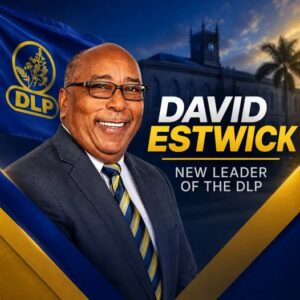
Eyes on Power Guyana extends congratulations to Dr David Estwick on his election as President of the Democratic Labour Party.
It is no small thing to take up the leadership of a party at its lowest ebb and ask it to rebuild. We wish him well in the work of renewal, and we recognise the responsibility he now carries to the members who placed their confidence in him.
We hold no brief in Barbadian party politics. But whoever stands as opposition to Prime Minister Mottley inherits questions her government has never answered — and Barbadians are entitled to press them. There are three.
First — reparations abroad, silence at home. Prime Minister Mottley commands the world's stage on reparations and African upliftment. Yet she has stood, comfortably and repeatedly, beside an administration in Georgetown that — in the words of its own African-Guyanese leaders — champions reparations internationally while doing nothing to repair the legacies of enslavement at home. Her advocacy abroad has never once been troubled by that contradiction standing beside her.
Second — the Saint Barnabas Accord. In 2022, Mottley and President Ali signed it with considerable fanfare: 1,000 Blackbelly sheep to Guyana, concessional land, and 50 acres of Guyanese soil to be owned by young Barbadians. Guyana's government committed millions. Three years on, only a fraction of the sheep arrived, the rollout stalled by the government's own account, and the leaders who cut the ribbon fell silent. Since then, the Leader of the Opposition has alleged — with drone imagery — that Blackbelly sheep sit on the President's private estate, an allegation the Agriculture Minister has denied as false. Both cannot be true. Barbados sent breeding stock that multiplies quickly; four years on, where is the flock this program was meant to build, where are the 50 acres promised to young Barbadians, and what became of the public funds? A donor nation is owed an accounting.
Third — the appeals she has not answered. In February 2025, Guyanese businessman Terrence Campbell addressed an open letter directly to Prime Minister Mottley, copied to Caribbean heads and international missions, warning of democratic decline in Guyana. That same year, Vincent Alexander, Chairman of IDPADA-G, laid the systematic marginalisation of Afro-Guyanese before the United Nations. Has the champion of African upliftment abroad acknowledged the Africans of Guyana who appealed to her by name?
The podium and the record do not match. Someone should make her say why.

Eyes on Power Guyana
31 August 2026
https://www.facebook.com/share/p/1HhqUhyqLC/
DLP’s Agriculture Spokesperson Calls on PM Mia Mottley to Rethink Vineyard Housing Project
Submitted on: August 21, 2026
Submitted by: anderson connell

Apart from the embarrassment I feel as a Barbadian watching this Government display, in real time, a level of incompetence and lack of accountability that has set a new low for the BLP Administration, I am genuinely bewildered by Minister Marsha Caddle’s explanation for the withdrawal of approval for the Suarez Brothers Circus to operate at the Belle.
Minister Caddle has explained that the Belle site is unsuitable because it is located within the island’s most protected water zone and is in close proximity to the Belle Pumping Station, which supplies approximately 25 per cent of the country’s drinking water from the aquifer beneath the area.
If that is the Government’s argument, then I am asking, why does the same principle not apply to the Vineyard Housing Development in St. Philip?
The Suarez Brothers Circus is temporary. It comes to Barbados for a limited period and leaves. The Vineyard development, however, is permanent. The Government is proceeding with approximately 1,100 homes on some 80 acres of former agricultural land at a reported cost of $300 million, in an area where there are legitimate concerns about groundwater, Three Houses Spring and the Vineyard Reservoir.
If the Government is serious about protecting our water resources, then it must explain why the same level of concern is not being applied to Vineyard. Minister Caddle has spoken about “water protection policies.” I want to know whether those policies apply to Vineyard?
The Government cannot have one set of rules for a circus and another for a multimillion-dollar housing development. Water protection cannot be selective. Environmental protection cannot be selective.
Where is the Environmental Impact Assessment? Is the Vineyard site located over a public water supply recharge area? What assessment has been conducted on the potential impact of this development on groundwater quality and quantity? What safeguards are being implemented to protect the aquifer, Three Houses Spring, the Vineyard Reservoir and the communities that depend on these water resources?
Whether a person supports the BLP or the DLP, access to safe, clean and reliable water is important to every Barbadian household. As a proud Barbadian and DLP Spokesperson on Agriculture & Food Security, I refuse to sit idly by while Government continues to make decisions that could permanently damage the natural resources on which this country depends.
I am therefore calling on Prime Minister Mia Mottley to stop any further expansion of the Vineyard Housing Project until the Government publicly demonstrates that it will not compromise our groundwater, springs, water quality or water supply.
Amoy Gilding-Bourne, Attorney-at-Law
DLP Spokesperson on Agriculture & Food Security
August 20th 2026
RIEP Professor Jason Arday
Submitted on: August 15, 2026
Submitted by: anderson connell
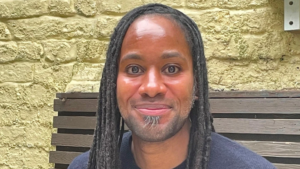
RIEP Professor Jason Arday.
We need to question where your hounding started and its impact, that may well have given ammunition to the media and others in academia to continue to hound you relentlessly over the past few weeks, and which has led to your untimely passing.
I was not a follower of you Professor Arday, neither do I know enough about the rights and wrongs of what has been claimed you have done. But whatever, you have done, it did not deserve the continuous hounding you have received by some in the academia world and the media, given your known and published disabilities.
Given plagiarism exists amongst all races in academia and published journals, it is clear that you became a single high-profile target for others, simply because of your race and nothing else (thinking those against DEI)...there have been no other highlighted and hounded cases of plagiarism in the media affecting other non-black race.
Your unfortunate situation and life ending is indeed a wakeup call for others pursuing excellence in academia, especially our Black folks.
https://www.varsity.co.uk/news/30360
https://www.facebook.com/story.php?story_fbid=1081422554836933&id=100089075940996&rdid=UCb8P7ile5LCjUNP#
Tribute to Rt. Excellent Sir Garfield Sobers
Submitted on: July 27, 2026
Submitted by: anderson connell
Tribute to Rt. Excellent Sir Garfield Sobers
By The Rt. Hon. Freundel Stuart, former Prime Minister of Barbados
Like most other Barbadians, I received the news of the passing of Rt. Excellent Sir Garfield Sobers with deep sorrow and have continued to feel his loss keenly.
My late friend, Garnet Winfield Ashby, his wife, Winifred, and other members of his household would not forgive me if I allowed this moment to pass without any comment. For it was at Garnet's house that I was regaled over and over again with the story of his taking young Garfield, at age thirteen, from his mother, Thelma and bringing him to St Philip every weekend to play cricket for Garnet's team, Kent. Garnet lived at Pennyhole, (now Gemswick) St Philip at the time.
From those early years, therefore, I became a Garry Sobers fan virtually by conscription. By May, 1965, however, when at the age of fourteen as a secondary schoolboy, I went to Kensington Oval to watch the Test Match, West Indies versus Australia, I became a Garry Sobers fan, aided this time by personal experience and observation. Words have mocked my attempts ever since then to capture the mix of emotions which possessed me when I saw him emerge from the pavilion, descend those steps and walk out to bat. All were hushed and had their gaze fixed upon him. His impact on me, on the many subsequent occasions I have seen him perform that ritual, lost none of the freshness which I experienced at age fourteen.
The philosopher Isaiah Berlin defined greatness as the ability to transform paradox into platitude. By that definition has Sir Garry fully qualified himself. For he took all of the paradoxes of cricket in batting, in bowling and in fielding and transformed them into platitudes, into routines, as if they were just a part of the natural order of things. That is perhaps what inspired cricket writer and enthusiast C.L.R James to say the following about Sir Garry:
"There are players (not many) of a style and personal history of whom it can be said that both physically and spiritually they would achieve mastery over any problem set them. There are a few people like that and Sobers is definitely one of the breed."
The greatness of Sir Garry has rested on and is derived from the resources of a strong personal character. Men of character have an almost carnal relationship with difficulty and with challenge, for it is in overcoming difficulties and meeting challenges that they prove and reinforce themselves. So was it with Sir Garry.
In June 1966, in the Second Test Match against England at Lords, with the entire top order of the West Indies team back in the pavilion, the score being a depressing 95 for 5 and with defeat staring the West Indies in the face, Sir Garry walked out in that manner so beautifully captured by the commentator, John Arlott:
"Everything he did was marked by a natural grace, apparent at first sight. As he walked out to bat six feet tall, lithe but with adequately wide shoulders, he moved with long strides which, even when he was hurrying, had an air of laziness, the hip joints rippling like those of a great cat."
Sir Garry confronted what seemed a daunting challenge with marble-like composure and calm. When the West Indies declared at 369 for 5, he was 163 not out and had brought along young David Holford who scored 105 not out. Against all expectations, the match was saved.
In February 1968, again against England at Sabina Park in Jamaica, Sir Garry faced another challenge. Here is how former Australian all-rounder Keith Miller described that challenge:
" That Sabina Park pitch had giant-sized cracks, or should I say crevices, strewn cobweb-like throughout its 22-yard length as though some minor earth tremor had shaken Kingston. At this stage of the match, I examined the pitch and could insert all fingers of one hand finger-length into these huge cracks. It was a batsman's nightmare, especially for Sobers as he had been dismissed first ball in the first innings..... but Sobers, grandly aided by Seymour Nurse, somehow dismissed the torment of the pitch and played strokes as though it was a plumb easy batting pitch. Frankly, this 113 was the best innings in such atrocious conditions I have ever seen." Again, the match was saved.
It says much about the greatness and strength of character of Sir Garry Sobers that generations of young men in the Caribbean tried to walk like Sir Garry, dress like Sir Garry and get their hair cut like Sir Garry. Young right handers, in their villages and communities, tried to bat and bowl as left handers just to simulate the style of Sir Garry.
Of his charm of manner, of his humility and of his humanity much has already been said and written. We, all of us, in a manner of speaking, became members of his household.
It brought me great pleasure as I delivered the eulogy at Garnet's funeral on August 6, 2003 at the Zion Tabernacle Church at Marchfield Village Road, St. Philip, to see Sir Garry there seated up front. He had not forgotten Garnet's contribution to his formation. It was never in his nature to forget his own journey or the inspiration and support he was able to secure from well-wishers along the way.
His first wicket in test cricket was that of Trevor Bailey, the England all-rounder, later to become a cricket writer and broadcaster. He wrote a biography of Sobers which was published in 1976. I have undimmed recollections of the emotion by which Garnet was overcome when Trevor Bailey, in preparation for that biography, came to see and interview him at his Marchfield Village Road home.
Sir Garry had many richly deserved honours bestowed on him during an illustrious life: Order of the Caribbean Community (OCC), Honorary Doctorate of Laws from the University of the West Indies, status of National Hero from the Government of Barbados and a Knighthood from Her Majesty, Queen Elizabeth II. When Her Majesty conferred the knighthood on Sir Garry in 1975, for the first time in her gracious reign, she was playing catch up. Ten years earlier the people of the Caribbean had, quietly and without fanfare, knighted Sir Garry and assigned to the Mighty Sparrow the task of letting the world know. Sparrow obliged with a touch of artistic panache: "Who is the greatest cricketer on earth or mars? Anyone can tell you it's the great SIR Garfield Sobers."
Our beloved and esteemed National Hero and national treasure is now gone. His life enriched us for as long as it lasted; his death has now left desolate that portion of our landscape which he so proudly, so uniquely and so gracefully occupied.
" O for the touch of a vanished hand And the sound of a voice that is still!"
As we bid farewell to our fallen hero, in the name of my late friends Garnet and Winnie and thousands of others who cannot now speak for themselves, I address Sir Garry in the immortal words of Cornelius Tacitus:
" If there is a place for the spirits of the good, if, as men of wisdom think, great souls do not perish with the body, may yours be a peaceful rest. Call us, members of your household, away from weak regret and maudlin lamentation to a study of your virtues, in respect of which to weep and to wail is wrong.
Let us honour you not so much with transitory praises as with our reverence, and if character permits us, with our emulation. That would be true respect, that the true affection of your nearest kin.
What we have loved, what we have admired [in Sir Garry] endures and will endure in the souls of men, in the eternity of the ages and in that renown that is ever the reward of noble deeds."
To Sir Garry’s children Matthew, Daniel and Genevieve, to his grandchildren and other relatives, and to the millions of others gladdened by his life but now saddened by his death, I extend on behalf of my own family and my self, heartfelt condolences.
May Rt. Excellent Sir Garfield St Auburn Sobers Rest in Peace
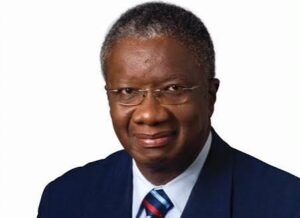
The Rt. Hon. Freundel Stuart, former Prime Minister of Barbados
July 27, 2026
BiMPay, Confusion, and the Failure of Digital Readiness
Submitted on: July 24, 2026
Submitted by: anderson connell
BiMPay, Confusion, and the Failure of Digital Readiness
The ongoing confusion surrounding the readiness and implementation of BiMPay reveals yet another initiative attempted by the Mottley administration where the idea may have had merit, but the execution has been nothing short of a nightmare.
From the beginning, there was public scepticism about digitalization, especially among elderly Barbadians. Yet little serious effort appears to have been made to allay fears, explain the system clearly, or prepare intended users for the transition.
There is no doubt that the ability to receive and make payments without leaving home can be useful, especially for elderly persons, persons with disabilities, and those with mobility challenges. But many elderly citizens struggle with digital platforms. Some are reluctant even to use a cell phone, far less email, online banking, apps, Instagram, or other digital services.
This reality should have been central to the design and rollout of any national digital payment system.
It should also be remembered that the much-vaunted universal digital card for social services remains a promise. One can only surmise that its delay may be connected to the fears, uncertainties, and practical challenges facing its intended users.
Then came the Digital Identification Card, with its several launches, false starts, and public concerns. Intended users expressed fear about access to personal data and the possible misuse of information. It is now also clear that pensioners feared they would require the digital ID card to continue enjoying free travel on public buses.
BiMPay has entered that same climate of mistrust.
According to the Government’s own release, BiMPay is Barbados’ national instant payment system. It allows individuals and companies to send and receive money twenty-four hours a day, seven days a week, regardless of their bank. Users may access the service through participating commercial banks and credit unions or by downloading the dedicated BiMPay E-Wallet.
The public was assured that the system was safe, using features such as multifactor authentication, encryption, fraud detection, and transaction notifications whenever money entered or left an account.
The release therefore served as an invitation for citizens to adopt the service, suggesting that key stakeholders had already agreed and joined the platform.
Then came the confusion.
Several interventions by the Governor of the Central Bank followed. Much of the confusion related to lack of public knowledge, unfamiliarity with terms, uncertainty about processes, and concern about outcomes.
When employees complained about delays in salaries and pensions after the platform’s launch, the Central Bank of Barbados placed the problem on incorrectly formatted account details submitted by employers and processing agencies. The fault, the Bank insisted, was not in the BiMPay system itself.
Later, it was revealed that not all financial institutions had connected to the e-wallet during the initial phase. Major entities, including Scotiabank and AffinityPlus Credit Union, had not immediately connected to the platform.
There were also challenges with signing up. Some financial institutions did not make the required BiMPay sign-up tokens easily accessible. Many banks failed to prominently display the token link on their primary banking web pages or apps. Again, the Central Bank was reported as having to intervene to have these challenges addressed.
Then came the explanation that BiMPay was facing “adoption hurdles.”
Most laughable was the comparison with other Caribbean digital currency initiatives and the claim that BiMPay had encountered an “adoption wall.” What is an adoption wall? In plain language, it means insufficient public education, weak user preparation, low confidence, and a failure to ensure that ordinary citizens, particularly elderly users, were comfortable with the digital literacy needed to use the platform independently.
That is not an excuse. It is an admission.
Pfitzer and Kowatsch, in their study Challenges and Innovations in Digitizing Elderly Care in Switzerland, identify key challenges in digital adoption, including economic disincentives, workforce imbalances, and fragmented technology adoption. Although their study focused on elderly care, its broader lesson is relevant: digital tools must be tailored to user needs if they are to improve access, efficiency, and confidence.
The same applies to Barbados.
After all the hiccups, what has been the Government’s response? Too often, it appears to search for rationales and excuses while placing the Governor of the Central Bank in the line of fire. But the real challenges remain unresolved.
The impact of digitization on elderly citizens has been studied carefully in countries that understand the risks. Pan and Hu, in Designing Sustainable Digital Platforms for Ageing Societies: A User-Centred Multi-Level Theoretical Framework, explain that the digital divide operates at several levels. The first level concerns access to networks and devices. The second concerns skills and usage. The third concerns whether usage produces tangible benefits, such as health management, social connection, and everyday convenience. Some researchers now identify a fourth level, dealing with sustained participation and the risk of digital disengagement.
This framework exposes the weakness of the Barbadian approach.
It is not enough to launch a platform. Citizens must have access to devices, reliable internet, training, confidence, ongoing support, and clear evidence that the platform improves their daily lives.
Countries with ageing populations have been taking these matters seriously. The revised national policy on ageing by Devonish and Nurse acknowledges the growing number of Barbadians over 65 and the increasing number of elderly persons requiring assistance, especially with care. Any new national programme, especially one involving money, identification, and access to services, must consider its impact on elderly and vulnerable citizens.
In the Barbadian context, several practical measures should have been implemented before the rollout. Family members should have been trained to assist elderly relatives. Community centres and remaining post offices should have been equipped with digital support desks, devices, printed guides, and trained personnel. Public demonstrations should have been held across constituencies. Special arrangements should have been made for pensioners, persons with disabilities, and those without smartphones or internet access.
Instead, confusion was allowed to lead the process.
The United Nations has long recognized that digital inclusion for older persons requires more than technology. Cultural, social, economic, psychological, health, and disability factors all influence whether older persons engage with or withdraw from digital systems.
The barriers include lack of devices, lack of internet access, inadequate skills, lack of experience, low confidence, limited motivation, inaccessible design, lack of perceived relevance, and physical or cognitive impairments in later life.
The UN therefore recommends policy action to ensure equal access to digital goods and services, including e-government, e-banking, e-commerce, e-learning, and tele-health. It also emphasizes that offline access must be maintained. That point is critical.
Digital transformation must not become digital exclusion.
The UN also recommends improving digital literacy, reducing skills gaps, providing safe training environments, encouraging intergenerational and peer learning, and protecting the rights, dignity, autonomy, privacy, and informed consent of older persons in the digital era.
These are the issues the Government should have addressed before BiMPay was presented to the public as a national solution.
Rather than finding excuses or placing the Governor of the Central Bank in the fire line, the Government must design systems around the real needs of elderly users and other vulnerable groups. Those systems must be modular, adaptable, accessible, secure, and supported by real human assistance.
Pan and Hu recommend digital platform designs that respond to major need dimensions, including health management, emotional support, social interaction, home care, and resource linkage. Barbados may not need to copy every model, but it must learn the central lesson: digital systems must serve people, not simply impress policymakers.
The Government must now focus on solutions that reduce fear, reduce ignorance, and provide comfort to users.
BiMPay may yet become useful. But usefulness will not come from press releases, technical jargon, or post-launch explanations. It will come from education, accessibility, trust, offline alternatives, responsive institutions, and a rollout strategy that begins with the people most likely to be left behind.
Until then, BiMPay will remain another example of a Government confusing announcement with implementation.
Derek Alleyn
July 22, 2026
Condolence Book in Honour of The Right Excellent Sir Garfield Sobers
Submitted on: July 23, 2026
Submitted by: anderson connell
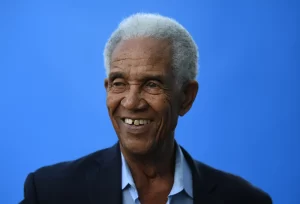
As we continue to mourn the passing of the Right Excellent Sir Garfield Sobers, the Barbados High Commission will open a Book of Condolences for the period July 23rd to July 24th, and July 27th to 31st. Visitation hours are 11.00am to 3.00pm.
We invite you to pay your respects and sign the book during these hours.
Kind regards
Ms. E. Betty Lewis, JP
Attaché Diaspora Affairs
Barbados High Commission to the United Kingdom
No: 1 Great Russell Street
London
WC1B 3ND
United Kingdom
Tel: 207 299 7150
Mob: 07515923368
Fax: 207 323 6872
Email: blewis@foreign.gov.bb
Website: www.foreign.gov.bb

Mottley’s Stamp and the Weakening of Development Administration
Submitted on: July 21, 2026
Submitted by: anderson connell
Mottley’s Stamp and the Weakening of Development Administration
Much has been said about the Mottley Government and, in particular, the performance of those who sit at the table, whether in boardrooms, Cabinet, or Parliament. There is now a general feeling that decision-making at every level is driven by what Mia Mottley wants. Her followers will no doubt deny the charge, but the evidence has become difficult to ignore.
From the moment she uttered the phrase “gimme the vote and watch me,” every major programme, policy, announcement, or claimed achievement has carried the Mottley stamp. It has become so pervasive that every building opened, every milestone achieved, and every positive development announced must somehow bear her imprint. Even the marker identifying the birthplace of Errol Barrow carries Mottley’s name in a manner that appears to dwarf the name of the Father of the Nation.
This behaviour is not merely obnoxious. It is demotivational. It has contributed to a decline in initiative, confidence, and productivity across both the public and private sectors.
Development administration has emerged as a distinct discipline because governments increasingly need to design, coordinate, and implement projects directed at specific national objectives. It differs from traditional public administration because it focuses not simply on maintaining bureaucratic routines and regulatory systems, but on organizing purposeful action, achieving change, and producing measurable development outcomes.
Barbados has attempted to use this development model to advance economic growth and social transformation. But the overwhelming hand of Mottley has made implementation more difficult.
What has emerged in Barbados is a weakening of the democratic assumptions traditionally associated with public administration: participatory governance, professional independence, public service neutrality, consultation, accountability, and respect for institutional process. These values have increasingly been replaced by obedience to a leader whose political style is deeply personal, centralizing, and commanding.
There is a view that benevolent dictators can reduce delay because decisions are made quickly and implemented without prolonged debate. But speed is not the same as wisdom, and control is not the same as competence.
In Dictatorship, Bad Governance and Their Impact on Public Need and Social Development: A Comparative Public Administration Study on the Evidence of Togo, Bienmali Kombate and Huang Dong argue that dictatorships severely hinder long-term economic growth and institutional stability. While centralized control may sometimes produce short-term progress, leaders often evolve from “stationary bandits” into extractive figures, causing institutions to deteriorate. They further argue that genuine development requires democratic accountability so that public needs, rather than personal authority, drive resource allocation.
Increasingly, the evidence in Barbados supports that claim.
A look at housing and education administration provides clear examples of institutional decay.
The National Housing Corporation once stood at the centre of housing development in Barbados. While it certainly faced challenges, its record was substantial. Its social housing initiatives created and maintained estates across the island for low-income earners. Its middle-income programmes at places such as Wanstead, Oxnards, Newton, and The Glebe, and its upper-end developments at Husbands, St. James and The Mount, St. George, all bear testimony to an institution that served Barbados well.
Today, however, the NHC appears to have been reduced largely to a rent collection agency, while housing development has been transferred to private sector entities and special arrangements already burdened by questions of poor management and accountability. This represents a decisive downturn in housing administration.
The Prime Minister’s recent announcement of a new initiative at Vineyard, offering so-called affordable houses starting at BDS $170,000, reflects this new direction. The question remains: affordable to whom?
Education tells a similar story.
Education is widely credited with the development of the Barbadian middle class. In the past, the administration of this vital social good was praised by international institutions and respected by citizens. Yet recent efforts to shift education from a public service-driven development model to a mixture of public-private arrangements have produced mistrust, confusion, and stagnation.
The recent reversal by the Ministry from a seven-year transformation programme to a ready-to-execute model is a clear example of policy confusion. Stakeholders are being asked to accept constant change without sufficient explanation, consultation, or trust. This uncertainty has been compounded by repeated changes in personnel, including ministers, parliamentary secretaries, senior officials, and appointments at the school level.
Development requires more than announcements. It requires institutional memory, competence, continuity, credibility, and trust.
Leadership is crucial to creativity within any organization, whether a church, school, ministry, business, or government. A leader must provide direction, but also motivation. For effective change to occur, followers must feel empowered, respected, and free to use their creativity. A sound-minded leader strengthens the confidence of team members and can enhance growth, performance, and competitiveness.
But where leadership becomes domination, creativity retreats.
Kombate and Dong remind us that political authority defines the boundaries of administrative change and shapes bureaucratic attitudes toward citizens. When political authority distorts the relationship between citizens and government, it undermines the conventional notion of public service. It also encourages policies that limit public administration, weaken state capacity, promote downsizing, and transfer public responsibilities into private hands.
This is precisely the danger now facing Barbados.
The absence of proper satisfaction studies within the public sector prevents a definitive empirical conclusion. However, anecdotal evidence points to serious concerns: recruitment based on political connection, bureaucratic loyalty, family ties, and personal association. There is also growing evidence of early retirements, refusal of acting appointments, reluctance to accept promotions, and declining morale.
The result is predictable: reduced productivity, deepening disenchantment, growing perceptions of social injustice, and resentment toward the Mottley regime.
No country can develop sustainably when public officers feel afraid, ignored, or politically managed. No institution can perform effectively when professional judgment is subordinated to political loyalty. No development model can succeed when every idea, project, and achievement must be branded with the name of one leader.
Barbados does not need government by personal imprint. It needs government by institution, competence, consultation, and accountability.
The country does not need every stone, sign, project, and policy to carry the Mottley stamp. It needs functioning systems, trusted institutions, empowered public officers, productive workers, and leaders who understand that development is not performance theatre.
It is disciplined, collective, accountable work in the public interest.
Derek Alleyne
July 2026
In 2024, the Government Proudly Announced a US$34.8 million Project.
Submitted on: July 21, 2026
Submitted by: anderson connell
In 2024, the Government proudly announced a US$34.8 million project, claiming it would address water quality and water scarcity issues, particularly for our farmers. At the time, I cautioned Barbadians to take that announcement with a grain of salt because, based on this administration's track record, it appeared to be little more than another public relations exercise, high on promises but short on delivery.
Regrettably, two years later, those concerns have been proven correct. We are now in 2026, and many farmers across Barbados continue to struggle with unreliable access to water for irrigation. This ongoing failure undermines agricultural production, threatens farmers' livelihoods, and jeopardizes our nation's food security.
The situation at Spencers, Christ Church, is particularly alarming. Farmers there have endured unreliable water supplies for far too long, with periods of extremely low water pressure and, in some instances, no water at all for up to two weeks. These are not isolated inconveniences, they are serious disruptions that result in crop losses, reduced productivity, financial hardship, and growing uncertainty for those who work tirelessly to feed this country.
While the Minister of Agriculture has publicly acknowledged the farmers' plight, acknowledgment alone is not enough. Farmers need solutions, not sympathy.
The Minister previously advised that the component required to increase water flow through the main pipeline serving the farmers at Spencers had been imported since March of this year. We are now in July, yet farmers continue to experience the very same problems of inadequate water pressure and complete interruptions in supply. Even more concerning is the complete absence of any update from the Minister regarding the installation of this critical component or the steps being taken to resolve the matter.
Government cannot continue to issue statements simply to save face. There must be meaningful action behind every promise and every declaration of support for our farming community. Empty assurances do not irrigate fields, protect crops, or sustain livelihoods. Our farmers deserve transparency, accountability, and results.
Agriculture cannot thrive on promises alone. If this Government is serious about strengthening food security and supporting local farmers, it must move beyond announcements and demonstrate its commitment through decisive action. Our farmers have waited long enough. It is now time for Government to deliver.
I therefore call on the Minister of Agriculture to immediately provide farmers and the wider public with a comprehensive update on the status of the imported component for the Spencers water main. The Minister must also provide a clear and definitive timeline for its installation and explain what interim measures are being implemented to ensure that farmers have reliable access to the water they urgently need.
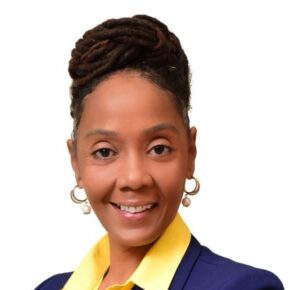
Amoy Gilding-Bourne, Attorney-at-Law
DLP Spokesperson on Agriculture & Food Security
July-18-2026
TRIBUTE FROM THE BARBADOS HIGH COMMISSION IN THE UNITED KINGDOM ON THE DEATH OF THE RIGHT EXCELLENT SIR GARFIELD ST. AUBRUN SOBERS
Submitted on: July 21, 2026
Submitted by: anderson connell
TRIBUTE FROM THE BARBADOS HIGH COMMISSION IN THE UNITED KINGDOM ON THE DEATH OF THE RIGHT EXCELLENT SIR GARFIELD ST. AUBRUN SOBERS
The Staff of the Barbados High Commission in the United Kingdom joins with our nation, region and indeed the whole world in expressing deep sorrow at the passing of our National Hero, the Right Excellent Sir Garfield St. Aubrun Sobers, on the eve of his 90th birthday.
The life story of this giant of an individual, universally recognized as the greatest all-round cricketer of all times, is the chronicle of a cricketing and indeed sporting genius who rose from humble beginnings in the urban village of the Bayland, Barbados to the pinnacle of international fame, sporting stardom and success through excellence, extraordinary natural cricketing and leadership skills, determination, resilience and self-confidence.
Sir Garry’s pre-eminence transcended his cricketing statistical achievements as a master batsman, a four in one top class bowler, a superb fielder and exceptional catcher as well as the captain in the mid-1960s of one of the best West Indies cricket teams ever. His generosity towards his fellow human beings was widely known. His humility of character, despite his remarkable success, ought to be an example for others to follow.
Sir Garry was a major, irreplaceable part of the West Indies team, first as player and then also as captain. This team lifted psychologically our Caribbean people residing in the United Kingdom in the 1960s, through its domination in test matches against England during that period. Our English-speaking Caribbean people, just starting to emerge from colonization into citizenship of independent countries, were able to stand and walk tall, with national and regional pride, as they encountered the challenges of life as immigrants in our former colonizing state.
This High Commission honoured Sir Garry, one of our ten original National Heroes named in 1998, on 25th April this year as part of our celebration of National Heroes Day. We hosted a lecture by Sir Clive Lloyd, OCC, himself a former outstanding West Indies cricket captain, on the phenomenal life of this great man.
We convey our deepest condolences to Sir Garry’s children, grandchildren and family. We hope that his legacy will remain in our hearts forever although his mortal remains transcend from Earth.
H.E. Edmund G. Hinkson, S.C.
Barbados High Commissioner to the United Kingdom