


Country Profile: Bhutan
Kaieteur News – Bhutan, landlocked country of south-central Asia, located on the eastern ridges of the Himalayas. Historically a remote kingdom, Bhutan became less isolated in the second half of the 20th century, and consequently the pace of change began to accelerate.
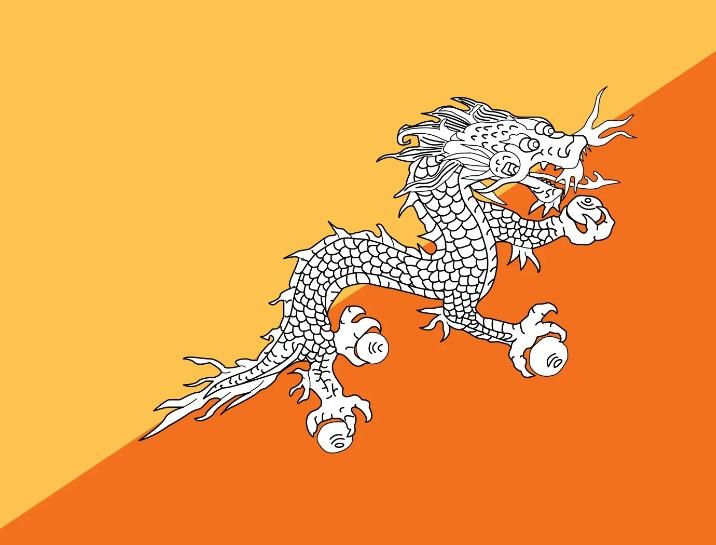
Bhutan Flag
With improvements in transportation, by the early 21st century a trip from the Indian border to the Bhutanese capital, Thimphu, that once took six days by mule could be made in just a few hours by car along a winding mountain road from the border town of Phuntsholing. The governmental structure also changed radically. Reforms initiated by King Jigme Dorji Wangchuk (reigned 1952–72) in the 1950s and ’60s led to a shift away from absolute monarchy in the 1990s and toward the institution of multiparty parliamentary democracy in 2008.
The economic core of Bhutan lies in the fertile valleys of the Lesser Himalayas, which are separated from one another by a series of high and complex interconnecting ridges extending across the country from north to south. The political nucleus of Bhutan is centred in the Paro and Thimphu valleys in the Lesser Himalayan region. Its location between the Assam-Bengal Plain of India to the south and the Plateau of Tibet of southwestern China to the north gives the country considerable geopolitical significance.
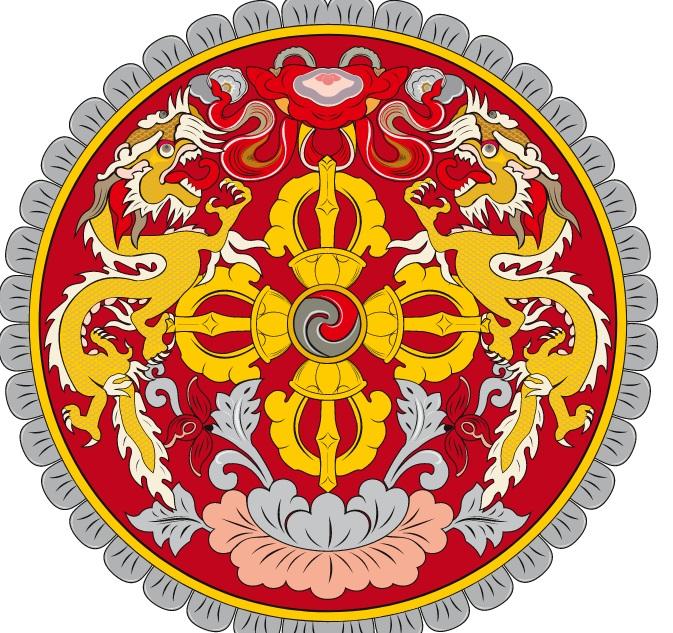
Bhutan Coat of Arms
Finance
Until the 1960s Bhutan did not have a currency; its people bartered for the goods they could not produce themselves. Now the country has a cash economy, with the Royal Monetary Authority issuing the ngultrum, the national currency. The country also has a few commercial banks, most of which are jointly owned (in various combinations) by the government of Bhutan, the government of India, and private interests. A development bank that specializes in industrial and agricultural loans was established in 1988. A stock exchange, open to citizens of Bhutan only, was founded in Thimphu in 1993.
Trade
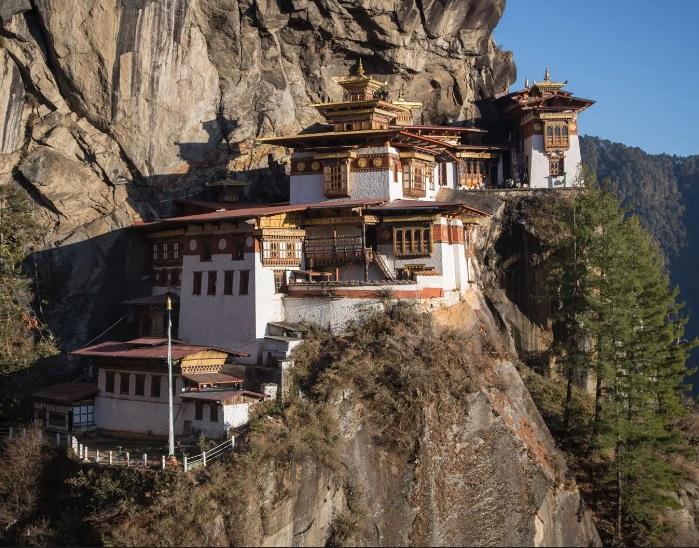
Tiger’s Nest Bhuddist Monastery
Because Bhutan is landlocked, trade and transit arrangements with India play a critical role in its economic life. Free trade with India prevails, and India is the source of the great majority of Bhutan’s imports, which include machinery, transport equipment, base and fabricated metals, petroleum products, vegetables and other food, and textiles. India also is the recipient of the bulk of Bhutan’s exports.
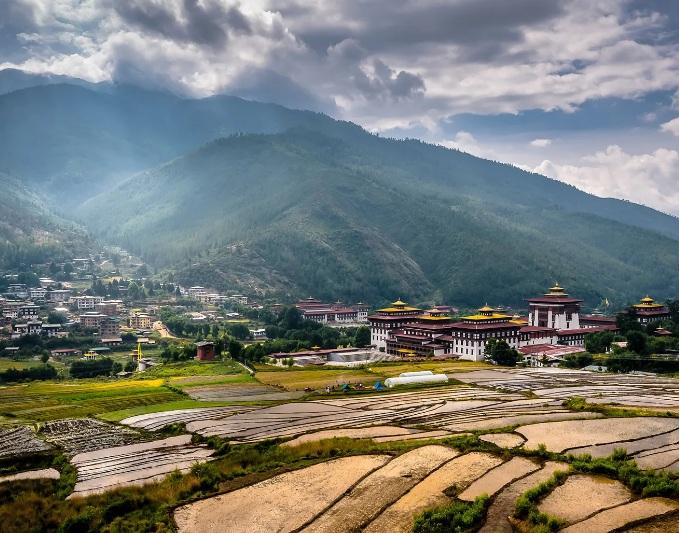
Tiger’s Nest Bhuddist Monastery
Electricity is the country’s principal export, followed by copper wire and cable, calcium carbide, metal alloys, cement, and polyester yarn. Cardamom and other spices, gypsum, timber, and handicrafts also are exported, albeit on a smaller scale. Secondary trading partners, for the most part in Asia, have included Japan, Hong Kong, Bangladesh, and Singapore. Bhutan is a member of the South Asian Association for Regional Co-operation (SAARC) and participates in the South Asian Free Trade Agreement along with the other SAARC signatories.
Cultural life
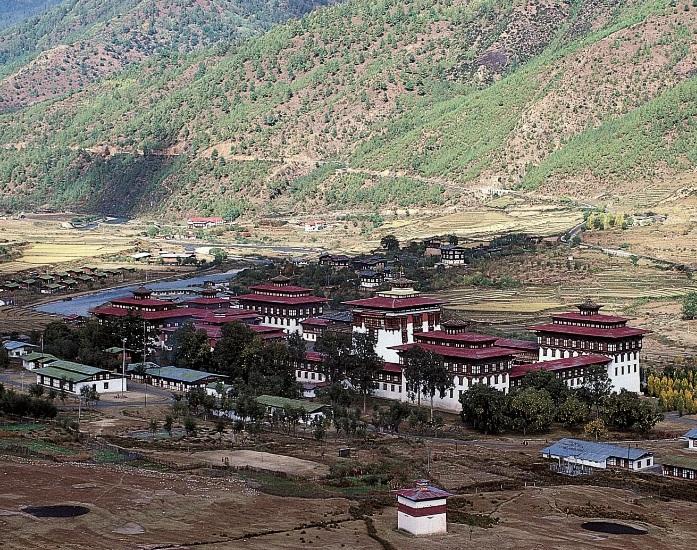
Taashi Chho Monastery
The three main ethnic groups of Bhutan—the Bhutia, the Nepalese, and the Sharchop—display considerable variety in their cultures and lifestyles. A typical Bhutia house is a two-storied structure of timber and stone with thick, pounded mud walls to keep out the cold. Livestock are kept on the ground floor, while the family lives above. Inside the house, a family will usually maintain a small Buddhist shrine in a corner. Among the livestock kept by Bhutia families is the yak, which supplies not only meat but also milk, from which butter is made for use in food preparations, in lamps, and on the shrine altar. Ordinary households may not be able to afford meat in their daily meals, however, and often rely on ema datshi, a chili and cheese stew, or kewa datshi, which adds potatoes to the mix. Both can be considered national dishes, and both are served with basmati or Bhutanese red rice.