


Despite eight solar parks and more fuel
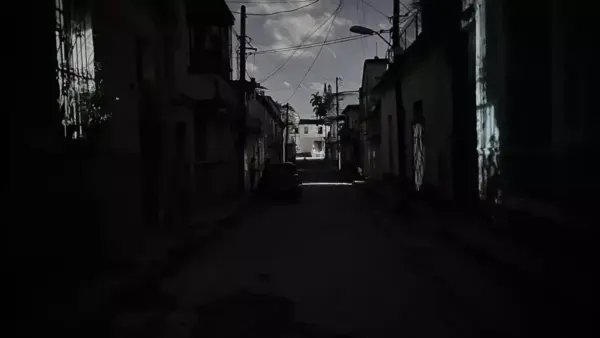
On Monday, the blackouts were widespread as “demand was way above the forecast,” according to UNE, the state electric company.
HAVANA TIMES – The energy deficit forecast by the Electric Union of Cuba (UNE) for Monday, was already serious, but ended up being even more so. It remained high on Tuesday and the forecast for Thursday isn’t much better.
This is an unprecedented situation, because although the authorities have announced similar figures before – like on February 12 – the impact has ended up being less. When they first announced a 1,800 MW deficit last October, the country plunged into a total blackout from which it took several days to recover. The deficit on Monday was the same amount, sparking fear of a repeat.
In Havana, on Tuesday, there were multiple power cuts due to heavy rains, and people are desperate at the prospect of the national energy system (SEN) collapsing again. This would be the fifth time in half a year that the country has been plunged into total darkness, each time for several days.
For this reason, the profusion of devices designed for moments without electricity does not stop growing. Light bulbs that come on just when the power goes out; batteries that are charged with sunlight; refrigerators with reinforced closure so that not a drop of cold can escape during blackouts; fans with backup included that provide a few minutes of breeze before shutting down; and gasoline generators that promise an energy backup in the hours without supply are some of the devices that Cubans with the means resort to, faced with the inability of the State to provide a basic electricity supply.
As in so many other public services before and now, Cubans have chosen to pursue life with and without electricity. Just as they close the windows to avoid flies coming in from the nearest mountain of garbage not picked up by the city or take a syringe they need to receive an injection with them when they visit the hospital, everyone also tries to find a way to recharge their mobile phone, run the electric coffee machine or sleep with a fan.
This is the case when there are already eight new solar parks in operation, which barely puts a dent in the overall deficit, which is an indication of how insufficient the plan for the “energy matrix change” is.
The big problem these days is not, as on other occasions, the lack of fuel. In March, Venezuelan oil exports to Cuba continued to rise. From the historic low of 10,000 barrels per day (bpd) in January, it went up to 42,000 bpd in February and 50,130 in March. Also, the various tankers that arrived on the Island last month offered a break in that regard.
The main drawback is failures in the thermal power plants, most of which are well past their 30-years of useful life. The units out of service include: two units in Mariel, Artemisa; two others in Cienfuegos; one at the Felton plant in Holguin; and another at the one in Santa Cruz del Norte, Mayabeque.
On Thursday the state electric company forecasts a deficit of 1,540 MW during peak hours. That translates into long blackouts, worse outside the capital.
Some private businesses benefit from this scenario, like the restaurant Cerdito House, which delivers food to homes and prides itself on offering “the best Creole food with courier to all of Havana.”
Along with the wide range of products advertised on their networks -pork in pieces, whole, roast, chicken, meat with peppers and tomatoes, yucca with mojo garnish, congri, salad, soup, croquettes and ice-cream- they indicate: “No matter the blackout, we cook!”
Translated by Regina Anavy for Translating Cuba.