


By Angry GenXer
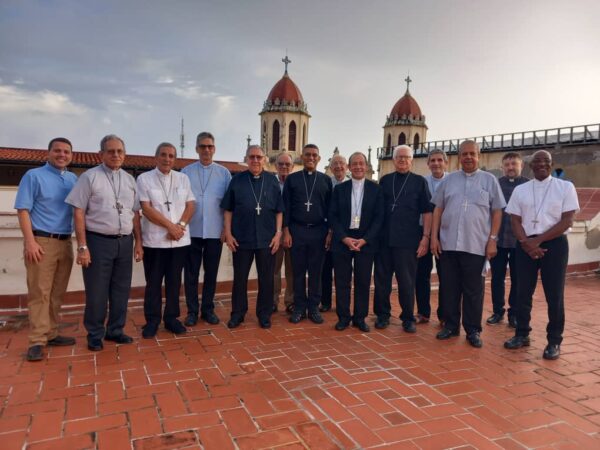
HAVANA TIMES – The situation in Cuba is critical. On June 15, the Catholic Bishops Conference of Cuba recognized this in a Message for the Jubilee Year. The document recognizes that Cuba is in dire need of “structural, social, economic, and political changes,” through a series of points that, rather than a technical analysis, offer concrete testimony of the desperate situations that Cubans are facing today.
The Bishops mention: “the avid search for essential goods, the prolonged lack of electricity, the growing emigration, the disillusion, the apathy due to the repetition of promises that never come to fruition… the sadness.” Among the victims of the crisis are: “the elderly, who are alone and abandoned… those who feel they can’t freely express their convictions,” as well as those who are living on the streets, eating from the garbage bins, suffering from addictions. “They’re resentful or broken, and becoming ever more violent… lacking love, and empty of hope.” They comprise an “uncertain future,” and not only in Cuba, but also for the world.
Cordially speaking, this argument is one that could be advanced by any of us who live in Cuba and whose senses aren’t blocked by unhealthy ideologies, comfort zones, or class interests to protect.
The Christian call of the Bishops’ Message is centered on hope. In terms of earthly affairs, they call on “everyone, but primarily those who hold higher responsibilities” to “create a climate without pressures nor internal or external restrictions” for the “changes that Cuba needs.” The use of “external” apparently refers to the embargo / blockade and other measures of the US government; the “internal” to the political actions of the Cuban establishment.
The Message of the Catholic Bishops was seconded on June 20th by another – this one from the Cuban Conference of Religious Leaders, referring in this case to nuns, monks and other people anointed within the Catholic Church. That message, addressed to “all the Cuban people, and everyone of good will,” ratifies the Church’s preferential option for the “poorest and most vulnerable,” and “those who suffer.”
The executive board of the Conference of Religious Leaders declared that they felt “great pain”: “for all those children, youth or adults who in Cuba don’t have the essentials to live decently; for those who don’t have anyone to help resolve their necessities or who feel unprotected; and for those who are harassed or silenced for speaking out respectfully in a positive manner, seeking dialogue.” It quotes the afore-mentioned Bishops’ Message: “for those who live without hope, imprisoned by uncertainty and confusion in the face of a dramatic present and a future that can’t yet be clearly seen, because there’s an impression that we’ve lost the springs, the dynamism, and the will to change the very harsh conditions of peoples’ lives.”
The Conference of Religious Leaders asserted: We’re with those who struggle daily to live, insist on exercising their rights, and peacefully commit themselves to [work towards] the necessary transformations.”
The document declares the prolongation of the current Cuban situation “unacceptable”. However, unlike the Bishops, they don’t mention the internal and external “decision-makers,” but focus instead on the victims of the crisis.
The Conference of Religious Leaders had a visible role in 2021-22 in the accompaniment of those deprived of liberty during the July 2021 protests and social explosion in different localities of Cuba.
Neither of the two documents has the length and detailed critical focus of the Pastoral Letter “Love waits for everything,” which was issued by the Conference of Catholic Bishops of Cuba in 1993 and was met with strong criticism from the government authorities. That was during the height of the Cuban crisis of the 90’s (known as the “special period”), which many Cubans compare with the current situation.
However, that doesn’t detract from the more recent documents’ character as testimony – also critical – or from their call to urgently find solutions and not new rhetoric, even if they abstain from explicitly mentioning the dissidents, or possible protagonists for change.
Obviously, the Cuban establishment would have preferred the Church to pronounce strongly against the US government policies, although such criticism is an inextricable part of the official discourse. It can’t be denied that the measures of the most recent US administrations not only influence Cuba negatively, but also the relations of its people with the diaspora, and, more recently, they’ve impacted the US-Cuban community itself, where many profess the Catholic faith. And the opposition, obviously, would have preferred a rhetoric more confrontational with the Cuban government.
At the beginning of June, Cuba received an official visit from Paul Richard Gallagher, Secretary of Government Relations of the Holy See. Gallagher met with the Cuban President and the local Bishops. We don’t know whether he had knowledge of the Message in preparation, but clearly he communicated to the state and ecclesiastical authorities something of the new Pope’s perspective. The current Pope – an American from the North and South – has been explicit about his interest in social topics. He knows Cuba first-hand, except that he visited it when he was a priest. In recent years, the Roman Catholic Church in Cuba and its Holy See were active in the inter-governmental dialogues between Cuba and the United States, including the reestablishment of diplomatic relations under Obama, and the liberation of 500 prisoners at the end of 2024.
In the last few years, there’ve been priests and Catholic religious leaders who have publicly expressed criticism of the Cuban situation, even without the explicit support of the church hierarchy (although they roused great solidarity and expectations among the laity.) The hierarchy evidently guards with great diplomacy and reserve their status before the Communist Party authorities (through their Office of Religious Matters) and the state officials. There’s no Freedom of Worship law in Cuba, hence the status of many Catholic organizations officially recognized by Canon Law is uncertain under State law, which leaves them vulnerable to political decisions. Instead, a tense calm exists between those holding high Catholic positions and those of the Cuban Communist Party and State establishment, especially since some people who previously served as a bridge have passed away.
Hopefully dialogues in diplomatic format, together with a position consistent with the social sentiment of the Cuban Catholic universe itself, will help to unblock the current crisis.