


Alredo Ortega, Chairman, BSCFA
Court finds BSCFA and two cane farmers liable for economic losses to BSI and BELCOGEN following 2021 factory blockade
ORANGE WALK, Wed. July 30, 2025
In a precedent-setting judgment, the Belize Sugar Cane Farmers Association (BSCFA) and two cane farmers have been found liable for damages to Belize Sugar Industries (BSI) and the Belize Cogeneration Energy Limited (BELCOGEN) for the 3-day blockade of the entrance to the mill, starting on December 28, 2021. The action started one day after the commencement of the sugar crop season. In the decision delivered on Monday, July 28, High Court Justice Rajiv Goonetilleke ordered that the BSCFA and cane farmers, Pablo Burgos and Canuto Alpuche, pay to the two companies combined damages of $564,130, interest at 6% since January 1, 2022, and the claimants’ legal costs. Two other cane farmers were released from the claim and their costs are to be paid by the claimants.
BSI and BELCOGEN, in separate claims brought in 2022, alleged that they lost earnings due to the intentional blockade. The defendants are accused of using cane trucks to block deliveries to the mill. The judge wrote in his judgment, “A man with full knowledge of what is going on has to intend the consequences of his acts.” BSI claimed $1,090,601 in damages, while BELCOGEN claimed $564,926 – a combined total of $1,655,527. However, because BSI and BELCOGEN did not take mitigating actions, that is, rerouting deliveries through the BELCOGEN gate that remained accessible, and using stored bagasse from the previous season, Justice Goonetilleke did not award higher damages. Instead, BSI’s award is $520,674 and BELCOGEN’s is $43,456.
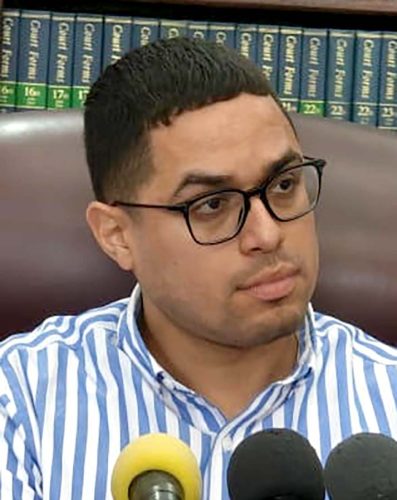
Hector Guerra, attorney representing BSI – BELCOGEN
BSI and BELCOGEN were represented by Senior Counsel Godfrey Smith, Hector Guerra and Edgar Lord. In an interview on Tuesday, Guerra pointed out that it is the first time in Belize that a claim for the economic tort of unlawful interference with economic interests (the right to trade and conduct business) has been heard and successfully argued.
Asked if the companies are disappointed that they did not get the full award requested, Guerra responded that the claims were never about the money, but rather about the underlying principle that other lawful means could have been used by the BSCFA to express its discontent. At the time, BSI was in negotiations with the BSCFA for a new commercial agreement, and they arrived at an impasse. According to Guerra, “BSCFA had, in a meeting, declared to BSI that if they could not come to some agreement in terms of what the commercial agreement would look like, they would, in fact, block the mill; and they also asserted that no other farmer would be allowed to deliver sugar cane to the mill.” BSI warned the BSCFA in writing on December 17, 2021 that if such action proceeded, it would sue for damages.
Guerra outlined that among the four elements that had to be proven in court was that unlawful means were used. “In this case, that unlawful means was a trespass on BSI’s property … which blocked the ability of farmers to deliver sugar cane,” explained Guerra. A third element was that the blockade was intentional in order to cause harm to BSI and BELCOGEN.
Guerra was also emphatic that the case is not about punishing protest. He stated, “This case does not say you cannot engage in industrial action. What it does say is that, if you are going to engage in industrial action in collective bargaining, you must do so lawfully with respect to the other party involved.” He rejected that there is any power struggle involved since both parties, cane farmers and the miller, need each other. Guerra says the relationship is symbiotic.
At the time of the blockade, the Prime Minister informed that the Government of Belize would provide indemnity to the BSCFA, and offered legal representation if the Association was sued. As such, Deputy Solicitor General, Samantha Matute and other staff from the Attorney General’s Ministry represented the defendants.
The Prime Minister, currently away on personal leave, has not responded to our question of whether the Government will uphold the indemnity pledge and cover the damages.
BSCFA chairman, Alfredo Ortega unhappy with judgment
Alfredo Ortega, Chairman of the BSCFA, says the Association has yet to sit with its attorneys to discuss the judgment; but he, personally, is unhappy with the ruling. He affirmed that it is not good for farmers and workers, because it would indicate that they should accept harmful treatment without being able to make clear their position. Confronted with the view that the judgment simply underscores the need to stick to lawful means of protest, he affirmed that our lawmakers need to assess the status quo as it relates to how the multinationals operate in Belize. He stated, “Right now it’s the BSCFA, but this will come to harm other groups in the near future if this continues the way it is.” Ortega believes they should have the right to be outspoken and “to say what we are feeling, and to do what we need to do whenever things are not going good for the farmers or for the people we represent.”
Asked if it will serve as an intimidation tactic, Ortega recalled that in 2009, when a cane farmer was killed, for years cane farmers were reluctant to participate in any movement, saying, “No, they will be sending the force again and they will be killing us.” Similarly, Ortega says this silences farmers so they do not have any movements to seek beneficial terms. He emphasized that all their actions have been about seeking just payments and just treatment. He declared though, “If the BSCFA disappears, as how they are looking for, the problem will still be there, as many of the farmers will still remain.”
When asked if the BSCFA can afford to pay the award if the government chooses not to uphold the indemnity pledge, Ortega replied, “Like in everything, nothing is easy. But we cannot throw [in] the towel and say we cannot do anything. Once we have the farmers’ support to move ahead, we will do it.”
Ortega hopes for an appeal, but says they will await word from the Government if it will uphold its indemnity pledge and continue offering legal assistance. He added though, “… if the Government goes and do the payment … many of the multinational companies are walking free with taxes that they are not paying to our country. We as Belizeans – all cane farmers are paying our taxes in whatsoever we purchase, in whatsoever we do … it’s our same taxes that will be used to pay these things.”
(AMANDALA Ed. Note: At 6% interest per annum, from January 1, 2022 to present, that damages figure is already around $682,597; and then there are the legal costs.)