


Exxon vows to push production beyond oil ships’ capacity for every new project – CEO says
Aug 06, 2025
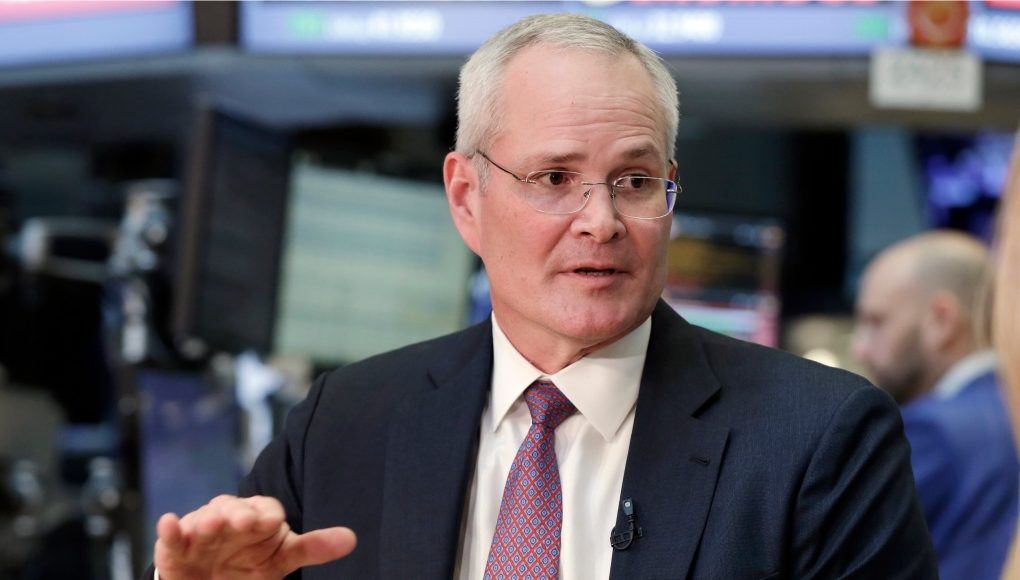
ExxonMobil Chairman and CEO, Darren Woods
Kaieteur News – ExxonMobil, operator of the Stabroek Block, has vowed to continue debottlenecking efforts for every new project brought onstream, as part of its strategy to maximise oil production beyond the nameplate capacity of its vessels and secure higher returns on its investments in Guyana.
ExxonMobil Guyana Limited (EMGL) currently has three Floating Production Storage and Offloading (FPSO) vessels producing oil, with a fourth expected to begin production this week. The FPSOs already producing oil are the Liza Destiny, Liza Unity, and Prosperity.
The Prosperity FPSO began production in November 2023 and reached its nameplate capacity of 220,000 barrels per day (bpd) within months. With subsequent modifications, Exxon was able to ramp up output to around 260,000 bpd. Similarly, in 2022, the Liza Unity vessel came online producing 220,000 bpd and was also optimised to 260,000 bpd. The Liza Destiny, Exxon’s first FPSO in Guyana, began production in December 2019 at 120,000 bpd and was later upgraded to 160,000 bpd.
During the company’s second-quarter earnings call on Friday, ExxonMobil’s Chairman and Chief Executive Officer (CEO) Darren Woods, was asked to speak about EMGL’s debottlenecking efforts and how sustainable it is for the vessels operating at the Liza Phase 2 and Payara projects to continue producing above their nameplate capacities.
Woods first highlighted the company’s commitment to optimising its capital investments. “Obviously, have a design basis, you work through what you think it’s capable of delivering. And then as you get it up and running, you’ve got our technology organisation, operations organisation, all very focused on making sure that we’re maximising the value of the capital that we put in the ground without compromising any of the necessary integrity and safety parameters. They’ve done a really good job of that,” the CEO said.
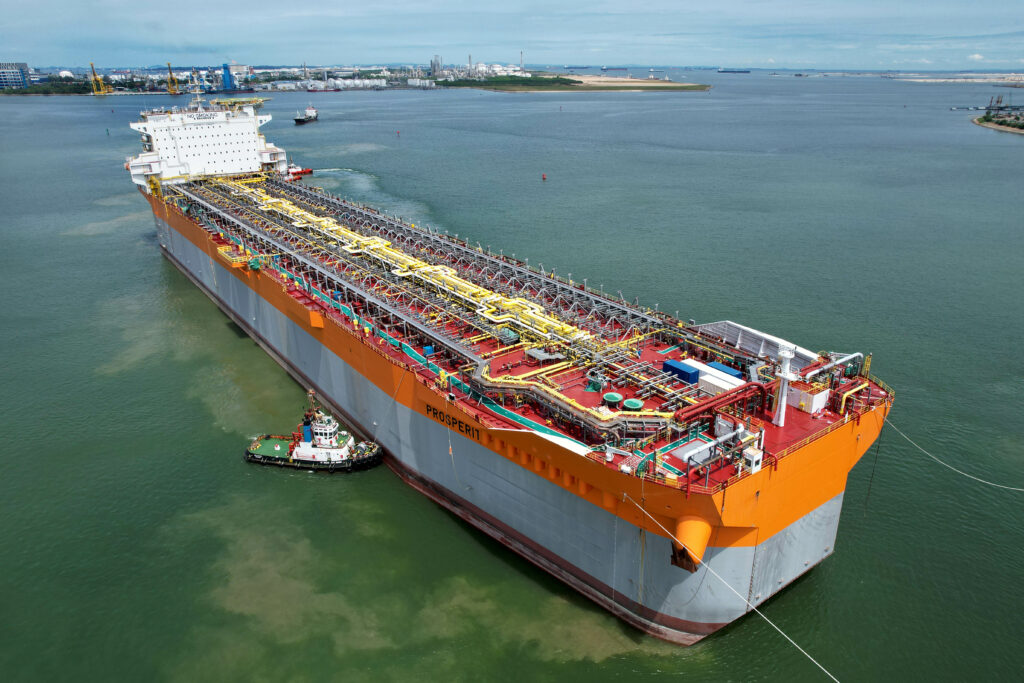
FPSO Prosperity
He noted that this is a consistent practice across all of Exxon’s global operations and credited the company’s focused technology organisation for playing a major role in those efforts.
“So, my view is we’re going to continue to see that with every new project that comes on. I would also tell you that as we find those debottlenecking opportunities and we think they’re applicable to the next project, we build that into the basis, so that we have a clear understanding of what capital is needed to deliver on the volume,” Woods explained.
He went on to state that Exxon will continue updating its investment and design basis based on lessons learned from previous debottlenecking efforts. According to Woods, while this approach may reduce “capacity creep” over time, it is offset by the organisation’s constant innovation and drive to maximise asset value. He noted that these two forces are essentially in competition, but expressed full confidence in the team’s ability to push performance further with every project.
Woods added, “We give you guys the design basis, that’s our best estimate. And then we hope for the upside based on the capability and quality of the folks we are getting after that every hour of every day.”
Moreover, he was also asked about a recent drop in production at the Liza Phase 1 project. While Woods said he did not have specific data on that development, he offered a broader explanation. “… And so, the teams are always working at development plans. Nobody is satisfied to have spare capital on the ground. So, there’s a lot of work going on to make sure that we maximise the utilisation of the kit we’ve already invested in. That’s the cheapest – that’s the highest-margin barrel is the ones that you bring online with capital that’s already in the ground,” he noted.
EMGL operates the Stabroek Block, which spans 6.6 million acres and is estimated to hold 11.6 billion barrels of oil equivalent, according to the Government of Guyana. ExxonMobil Guyana holds a 45% stake in the block, while Hess Guyana Exploration Ltd. (now Chevron) holds 30%, and CNOOC Petroleum Guyana Limited holds the remaining 25%.
In addition to the Yellowtail project expected to start producing this week, Exxon has two other sanctioned developments: Uaru and Whiptail. The company has also submitted an Environmental Impact Assessment (EIA) for a seventh project, Hammerhead, which is targeting a 2029 start. An application has also been filed for an eighth project, Longtail. Exxon is aiming to bring all eight developments into production by the end of the decade, targeting a combined output of 1.7 million bpd.
Related
Similar Articles