


The former chief inspector says national wellbeing checks on pupils could worsen children’s mental health and make them “start to believe they are sad or worried”.
Amanda Spielman opposed an amendment to the children’s wellbeing and schools bill, currently before the House of Lords, which called for collecting national data on children’s mental health and wellbeing.
Lord Gus O’Donnell, who tabled the amendment, cited a PISA survey that showed British 15-year-olds have the lowest rate of wellbeing in Europe.

“We should be ashamed. We should be thinking about what interventions are going to make a difference…but we will never know unless we do something about measurement to assess whether they work,” he said.
According to NHS data, about one in five children and young people aged 8 to 25 had a probable mental disorder in 2023.
Long term harmful impacts
However, Spielman, who served as chief inspector from 2017 to 2023, said: “If we do not want measurement processes in themselves to harm children, we should not collect data by constantly asking children who are not unwell about their well-being, and especially about their negative emotions”.
A government trial on wellbeing interventions in schools published this year found four out of five tested led to “adverse” or “negative” effects on some pupils.
The trial, which involved 12,166 pupils across 153 schools, suggested interventions had a positive impact on children’s emotional difficulties in the short term, but had a more negative impact in the long term.
Referencing this, Spielman said she had seen “so many dreadful examples in schools” where “you can see the change; they [children] start to believe they are sad or worried or afraid, where this has not even occurred to them”.
Wellbeing taken ‘very seriously’
Spielman also disagreed with proposals tabled by Baroness Claire Tyler for a mental health practitioner in every school.
“There is a growing recognition that spending too much time talking about mental illness to young people who are not ill can be counterproductive,” Spielman said. “We may need less mental health awareness training in schools, not more.”
But Baroness Natalie Bennett said: “If we measure only the exam results, that is what we are going to judge our schools on. That is what … has got us into this position.”
Ofsted was heavily criticised during Spielman’s tenure over the impact of inspections on school leaders.
A coroner’s report into the suicide of headteacher Ruth Perry in 2023 found “very easily that Ruth’s mental health deterioration and death was likely contributed to by the Ofsted inspection”.
Spielman said she took wellbeing “very seriously”. In response to Bennett, she said she “wouldn’t ever suggest that academic outcomes were the only thing that mattered for children”.
Measuring has ‘immense value’
Jacqui Smith, the skills minister, said about 60 per cent of schools already used wellbeing measurements, which had been of “immense value”.
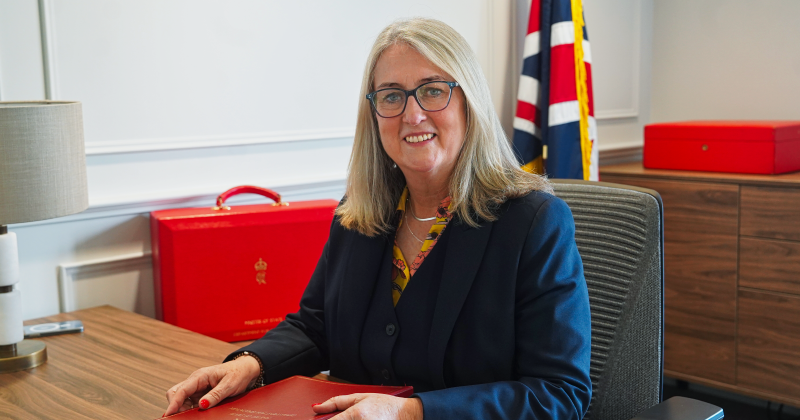
“We do not agree that a centrally administered survey, costing millions of pounds a year over this spending review, is necessarily the right way forward”, she said.
“We believe in measurement, but for schools to choose to measure, it is important that the tools they use is relevant to them and they can be assured that results will not be used for accountability in an overly simplistic way.”
Both amendments were removed.
Recent YouGov polling suggests 66 per cent of parents consider pupil wellbeing important when choosing a secondary school, above school location (62 per cent), facilities (61 per cent), school culture and ethos (56 per cent), Ofsted rating (52 per cent) and exam results (43 per cent).