


BELMOPAN, Mon. Sept. 15, 2025
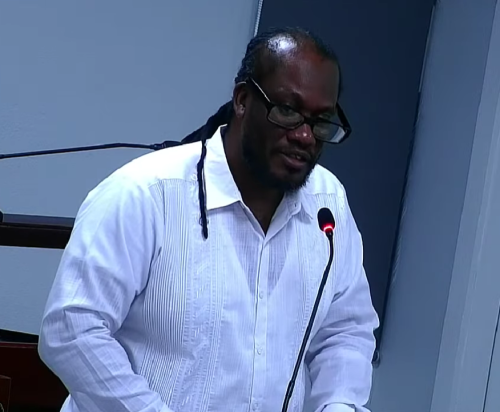
Attorney General Anthony Sylvestre acted as the Leader of Government Business in the Senate today during a marathon session that stretched over 10 hours. Like Friday’s House Meeting, the proceedings were held at the George Price Center for Peace and Development in Belmopan. Madam President of the Senate, Hon. Carolyn Trench-Sandiford stated that although the renovations to the National Assembly building were initially slated for completion in September, there have been delays, and the new projected end date is December 2025.
Three treaty-related motions were introduced for approval. Heavily debated was the Resolution Authorizing the Ratification of the Agreement Establishing the Advisory Centre on World Trade Organization Law (ACWL) Motion, 2025. The Centre, based in Geneva, offers developing countries legal training, support, and guidance on WTO law and dispute settlement procedures. Sylvester emphasized the complexities of the multilateral trading system, “which Belize is compelled to be a part of,” and underscored the value of the ACWL in levelling the playing field for developing countries. He noted that the Center could be especially beneficial to Belize, as it prepares for its fourth trade policy review in May 2026, since it offers access to legal expertise at lower costs than private law firms. Sylvestre also announced that Norway has offered to cover the one-time accession fee (approximately US$50,000). When asked why, he simply credited the negotiating skills of officials within the Ministry of Foreign Affairs.
During his contribution, however, Lead Opposition Senator, Hon. Patrick Faber questioned the long delay in acceding to the Center, noting that it has been in existence since 2001. Business Senator, Hon. Kevin Herrera echoed the sentiment, stating that Belize should have joined a long time ago. Faber also pressed for clearer details on how accession would tangibly benefit Belizeans, asking how it would “put food on the table.” He urged the Government to commit to publishing annual reports for Belizeans to “know what we are getting.”
Referencing the proposed legal fees, PUP senator, Hector Guerra reported that Belize would be charged an hourly rate of US$250. “This, when considering what it would cost to hire private legal expertise is a bargain,” he said. Notwithstanding the questions, the motion had unanimous support.
Senate authorizes ratification of Convention on the Privileges and Immunities for the Prohibition of Nuclear Weapons in Latin America and the Caribbean
Though Belize became a member of the Agency for the Prohibition of Nuclear Weapons in Latin America and the Caribbean (OPANAL) when it signed the Treaty of Tlatelolco on February 14, 1992 (ratified in 1994), the necessary legal protections have not been incorporated into domestic law for OPANAL to operate effectively within Belize. These protections include immunity from arrest, tax exemptions, and secure communications, enabling the agency to fulfil its duties without interference. Senator Sylvester told the Upper House of Parliament that ratifying the convention would demonstrate Belize’s commitment to international law, and strengthen its role in regional disarmament and security.
While the Opposition also supported this motion, they raised several questions. Senator Faber challenged the timing of the ratification, asking whose agenda is being fulfilled, given that the treaty sat untouched for over three decades. “International treaties are not just about noble principles, they’re also about politics and pressure,” Faber said. He added, “The nuclear non-proliferation agenda is heavily shaped by bigger powers, by multilateral institutions, by those who have the luxury of dictating terms to smaller states like ours.” He pressed for clarity on what Belize stands to gain, and what costs may be involved.
UDP senator Hon. Sheena Pitts had concerns about the immunity clause. “Immunity should not mean impunity,” she affirmed, as she called for a review of actions by diplomats who should be subject to our domestic law.
In response to the questions about timing, Sylvester stated, “It is unfortunate that it is thought that doing the right thing, although belatedly, might have been motivated by other concerns. But no.” He insisted that ratification is being sought for Belize to comply with international obligations. National Trade Union Congress of Belize senator, Hon. Glenfield Dennison did not consider the responses being provided to questions as adequate.
Senate authorizes Accession to Protocol on the Privileges and Immunities of the International Seabed Authority
The final approval of ratification in the Senate had to do with the Protocol on the Privileges and Immunities of the International Seabed Authority (ISA). The measure aims to ensure that ISA and its affiliated agencies are granted the necessary legal capacities and protections to perform their official duties and fulfil their mission. According to the Government, these provisions align with those extended to similar international agencies operating in Belize and fall under the Diplomatic Privileges and Consular Conventions Act. Established in 1984, the ISA’s core mandate is to regulate mineral-related activities in the international seabed, an area that covers approximately 54% of the world’s oceans and is referred to as “the common heritage of mankind.”
Sylvestre noted that although Belize acceded to the United Nations Convention on the Law of the Sea (UNCLOS) in 1983, it has yet to ratify “the foundational legal instrument that provides ISA with the necessary legal protections to function effectively.”
At this stage in the proceedings, Senator Faber challenged the Government’s approach in presenting the treaty-related motions, suggesting that the process would have been clearer had it been framed as a deliberate effort by the Government to review and ratify all outstanding treaties. He said that instead, they are expected to believe there is no agenda in their ratification. Faber criticized the responses to their questions, stating, “It must mean that we are jumping through hoops for somebody else.” He also pointed out that the motion failed to explain how ratification aligns with Belize’s blue economy strategy. Faber pressed further, asking what had been promised – or what has been threatened – that would compel Belize to ratify the decades-old treaties.
Senator Janelle Chanona, speaking on behalf of the NGO community, voiced concerns over the insufficient use of scientific data in decision-making. She stressed the importance of ensuring an equitable distribution of benefits, and called for robust, meaningful environmental protections to be embedded in the process.
In allaying concerns about the immunity clause, PUP Senator Linsford Castillo commented, “The privileges and the immunities are strictly functional. They are limited to what the ISA requires to discharge its mandate. They do not place the authority above the law, nor do they exempt individuals from responsibility for private acts outside their official capacity.”
As to the work of the ISA, Castillo shared that it “ensures that no single state, no company, no actor can unilaterally exploit these deep sea resources for their own exclusive gain. Instead, activities must be carried out for the benefit of all states, including Belize, with particular attention to the needs and interests of developing countries …”
While the Opposition also supported the motion, Senator Pitts recommended that the Government of Belize request a waiver to state that, “where there are things done, even if during the course of official capacity, and they impede the course of justice, that you should be able to take action against those persons who’ve done it.” She also called for consistent reports for the public to be aware of Belize’s interaction with the ISA.
In closing the debate, Senator Sylvestre listed several organizations that already enjoy similar immunities in Belize, including the International Civil Aviation Organization, International Labour Organization, the World Health Organization, UNESCO, and the Caribbean Court of Justice. He emphasized that the Vienna Convention serves as a guiding framework, recognizing the sovereignty of states. “When these subsequent treaties or agreements that they are crafted, they also take that into cognizance, that the member states are sovereign, and that they ultimately have a duty and a responsibility to their people and to their country first,” he stated.
Opposition questions timing and cost of Belize’s increased CABEI shareholding
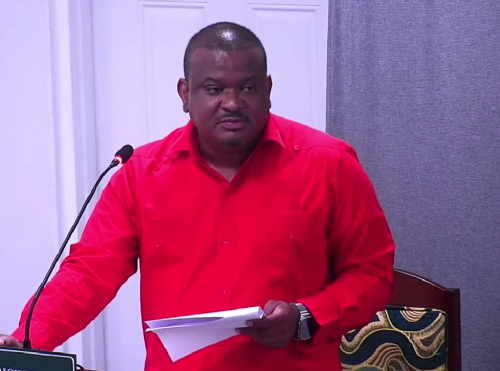
Echoing concerns previously raised in the House of Representatives, Senator Faber questioned the timing and affordability of the Government’s increased shareholding in the Central American Bank for Economic Integration (CABEI). “Belize is already struggling under the weight of debt,” he stated. Faber argued that the proposed investment, BZ$20 million, could be redirected to more immediate needs like building more schools or other projects that could directly benefit Belizeans. He also asked if a sinking fund will be established for the callable portion of the subscription.
Faber also provided some historical context, cautioning that Belize’s increased shareholding in CABEI does not guarantee greater benefits. “Belize is last on the totem pole,” he said. He argued that all other Central American nations, including Guatemala, are prioritized over Belize. Faber went even further and described Guatemala’s posture toward Belize as petty. He revealed that they even opposed the removal of Belize’s barrier reef from UNESCO’s World Heritage in Danger list back in 2018.
Business Senator, Kevin Herrera, speaking in support of the motion, described it as laying the groundwork for future infrastructure and “increasing our opportunities later on to borrow more.” He said it increases our access to development financing, and emphasized the importance of countries having such options. Opposition senator Gabriel Zetina countered saying, “… this Government’s ultimate solution to every problem is [to] borrow.” For Senator Pitts, a main question was what returns Belize would receive as a result of the subscription. Making the point about the subscription being a gateway to borrowing, she questioned, “are we going to have a Blue Bond situation 2.0?”
The Opposition made a request for the motion to be delayed, but this was disregarded.
Opposition slams delays in Corozal-Sarteneja road project
During the debate on Government’s motion to suspend principal repayments for six months on the US$50 million 2019 loan for the Corozal-Sarteneja Road upgrade and the construction of the Pueblo Nuevo and Laguna Seca bridges, Senator Faber criticized the PUP administration for delays in the project. Though he conceded that COVID and weather disruptions may have played a role, he deemed it unacceptable that it would take six years to complete. He claimed that the requested suspension is intended to preserve access to the undisbursed funds totalling approximately $5.87 million.
PUP senator Christopher Coye asked the senators to recall the structure of the loan agreement, noting that the Government of Belize does not directly receive any of the funds. Instead, the Export-Import Bank of Taiwan disburses payments directly to the contractor, a Taiwanese firm—as per the terms of the loan.
Opposition warns of long-term burden from US$20 million World Bank credit line
The Opposition criticized the Government’s acceptance of the US$20 million contingency line of credit from a World Bank agency, describing it as yet another loan that would burden future generations. He characterized it as part of a broader debt trap “perfectly encompassing the actions of this government.” He argued that the PUP administration has borrowed incessantly, then kicked the can down the road. He says they are now repeating the same pattern that led to the Superbond.
Senator Pitts invited the Government to conduct a debt sustainability check. In response, Senator Coye noted that such evaluations are already done annually by both the International Monetary Fund (IMF) and the Central Bank of Belize. The interest rate is 1.5% on the amount disbursed.
Senate approves two bills
The Senate today also approved the Trade Licensing (Amendment) Bill, 2025 that gives legal effect to Proposal 22 in the Collective Bargaining Agreement of the joint unions which represent public sector workers. It will see the government cover 100% of pension and benefits for staff and teachers of grant-aided schools. The other bill approved in the Senate was the Trade Licensing (Amendment) Bill, 2025 which extends the coming into effect of the law to November 1, 2025 to allow for more education of the business community.