


Ministry of Health reports first case of New World screwworm in humans in Belize.
By William Ysaguirre (Freelance Writer)
BELIZE CITY, Mon. Aug. 18, 2025
The Ministry of Agriculture sounded the alarm on New World screwworm last November, because of the economic impact it could have on Belize’s cattle industry, and Belize’s cattle exports to Mexico. At the time, agricultural health authorities advised farmers to look for any open wounds on their livestock and to treat all such wounds and lesions, which would provide fertile ground for the Cochliomyia hominivorax fly to lay its eggs, which give rise to the New World screwworm in its larval stage.
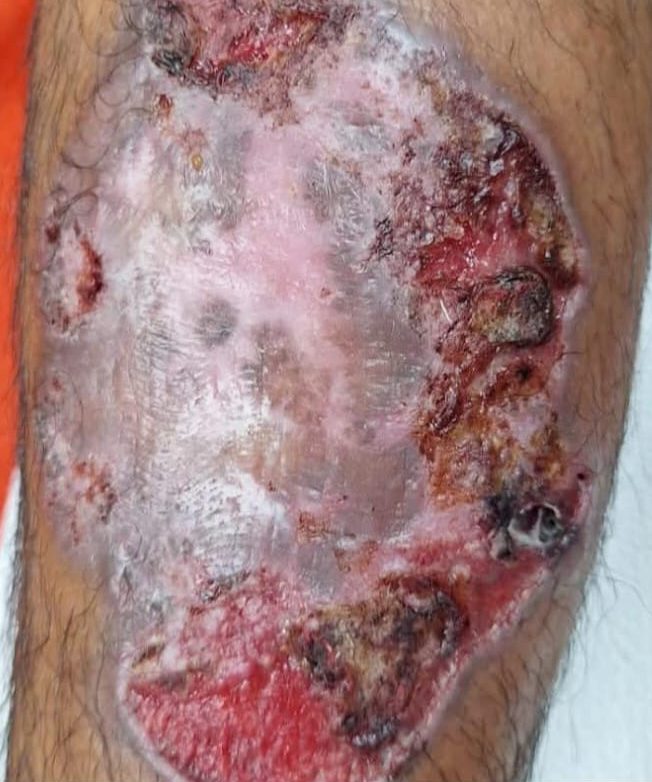
Cases of New World screwworm affecting humans are rare, but now the Ministry of Health has detected its first case of such human infection in Belize. Chief Vector Control Officer, Kim Bautista of the health ministry reported that a 21-year-old farmer visited the San Ignacio Hospital to be treated for screwworm infestation of a wound. The case was confirmed by entomological identification of the larvae removed from his wound, and the doctors immediately began treatment of his wound with Ivermectin and other antibiotics. The patient is reported to be responding favorably to the treatment, and health authorities expect to release him from hospital later on Monday evening. The patient was previously being treated for a leishmaniasis lesion, and it is believed that the fly was able to infect him through this wound.
From November, the Belize Agricultural Health Authority (BAHA) began to work in partnership with the International Regional Organization for Health in Agriculture (OIRSA) and the Inter-American Institute for Cooperation on Agriculture (IICA) in monitoring and surveillance to detect the first case of New World screwworm, wherever it might present itself. The first case of screwworm in Belize was reported in January this year. So far, there have been 335 cases of screwworm infection detected in livestock and pets. The Ministry of Agriculture has implemented measures to restrict the free movement of livestock, and any farmer wishing to transport animals outside his district, must first obtain a health certificate that his livestock are screwworm free

Bautista advised the public that anyone who detects a wound or lesion on the body that may have become infected, to seek treatment as early as possible, as it may take 2 to 3 days before larvae appear in the wound to confirm New World screwworm infestation.
Dr. Salustino Pech of the Belize Agricultural Health Authority warned that the larvae feed on living tissue of warm-blooded animals, and the fly will not distinguish or discriminate between dogs, cats, cattle or humans. The agricultural authorities have found that the greatest occurrence of screwworm in Belize has been reported in dogs. Any domestic animal so infected may lead to an increased presence of the fly in the area, which increases the probability that the fly may find a fresh wound on a human host. The infestation may cause severe pain, secondary infections, and could become life-threatening if left untreated.