


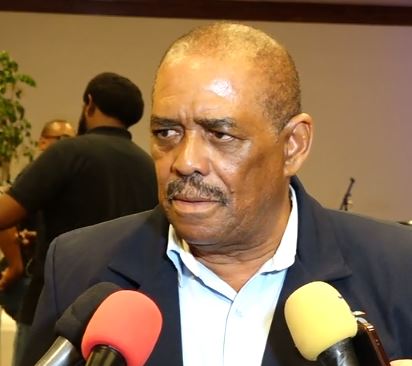
Herman Blease, Security Specialist, Belize Tourism Board
By Charles Gladden
BELIZE CITY, Thurs. Aug. 14, 2025
The Belize Tourism Board (BTB) officially launched its National Tourism Security Strategy 2025–2030 on Wednesday, August 13, in partnership with the Ministry of Tourism, Youth and Sports, and Diaspora Relations.
The strategy is a 5-year plan that is aimed at reducing any possible risk tourists may encounter, while improving their confidence in urban and rural communities.
“We went to all the corners in the country and we interviewed chairmen, mayors, chairpersons, and stakeholders, and we tried to understand what their main tourism concentration was in their particular corners. We look at their needs, whether [it’s] lighting issues, safety issues, or hot spots that make tourists unsafe. We look at all of those, then we go to the table and discuss all threats to the industry, and then we start developing this strategy from there,” said Herman Blease, Security Specialist at BTB.
The strategy has been in the pipeline for approximately two years, and it has led to the collaboration of six agencies which have formed a Tourism Security Task Force, according to Blease.
“What this plan is intended to do is to bring all the agencies together by way of their commitment to the document, to make sure that we keep the industry completely safe. Tourists can come to Belize and feel safe that while they’re here, and they are staying and enjoying their vacation together, the Tourism Security Forces are all working in tandem to make sure that tourists come, feel safe, and enjoy their stay while they’re in Belize,” he said.
The six agencies which comprise the Tourism Security Task Force are the Ministry of Tourism, BTB, the Belize Police Department, the Belize Coast Guard, the Belize Defence Force, and the National Institute of Culture and History (NICH).
“The Belize Tourism Board receives reports from the police all the time. We receive a monthly report, so what changes now is that the reports have been tied to the strategy; whatever report or action is completed on the ground has to relate to the strategy. Not anymore going out and figure things out and then writing a report; that’s not the way we’re expecting it to work now. When we receive a report from any of the agencies, it has to tie back to the strategy,” Blease said.
The strategy is supported by the National Sustainable Tourism Master Plan 2030, the National Tourism Policy (2017), and Plan Belize (2020–2025)—all of which recognize security as a cornerstone of sustainable tourism development. Stakeholders from tourism, law enforcement, diplomatic, and private sectors are invited to attend the launch, which will serve as a call to action for ongoing collaboration and shared responsibility in securing Belize’s tourism future. The Tourism Security Task Force will meet quarterly to discuss any queries or challenges they are facing, and will publish an annual review of their work.