


Officials are considering shaking up the system of education, health and care plans that would likely lead to a narrowing or new structure of support as part of major SEND reforms, a government adviser has said.
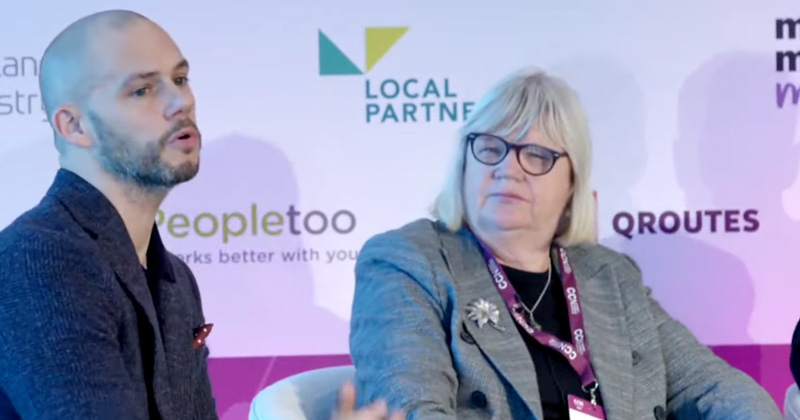
Speaking to Schools Week at the Schools and Academies Show in London today, Dame Christine Lenehan said she expected the “structure around EHCPs” to change.
Discussions are ongoing about whether they should be narrowed to just serve special school pupils, Lenehan confirmed.
Schools Week understands this could see EHCPs – or potentially a new alternative – becoming a path for pupils in special schools only.
EHCPs stipulate the support pupils schools are legally required to provide. But the number of plans has ballooned in recent years from 294,758 in 2019-20, to 434,354 in 2023-24.
Schools and other services have struggled to keep up with the demand.
The government has been planning reforms to the SEND system, prompting speculation the whole system of EHCPs could be scrapped.
Asked if families should be worried that EHCPs would survive in their current form, Lenehan said: “It depends what they’re going to worry about, really.
“Do I think the structure around EHCPs will change? Yes, I think it probably will, because it’s not fit for purpose. Do I think we will still be able to recognise and support children’s needs in any other structure? Yes.”
She added that “most education, health and care plans these days are actually about getting children the education they deserve.
“It’s not necessarily about needing the additional factors that health and social care bring which is what they were designed for in the first place.”
Does she envisage there being fewer EHCPs, more narrowed?
“I think probably so. I think because that will take us back to original purpose.”
‘What is the purpose?’
Asked whether this would involve narrowing EHCPs to only apply to children in special schools and whether they had any place in mainstream, Lenehan said: “I think, to be honest, that’s the conversation we’re in the middle of.
“What is it? Where are the layers? What does it look like? Who are the children that actually need this? And also a broader thing that says, you know, you end up with something that’s huge.
“It’s what is the purpose of EHCPs? Are they delivering what they need to? And is the relationship in schools and local authorities in terms of putting the EHCP together and then delivering what the outcomes are, the right relationship with the right amount of stuff in.”
Lenehan, the former chief executive of the Council for Disabled Children, also chairs three local authority SEND improvement boards. This enables her to see it “through a local authority lens.
“I see the huge amount of money we put on statutory assessment to get the EHCPs right, and then I look at the translation into school, and it’s not working.”
Speculation about changes to EHCPs has inevitably led to severe concerns among families their children will lose provision. Are they right to worry?
“No,” said Lenehan.
“Any system that the government looks at will have a full consultation process, will go through quite a long way of getting there, and we’ll have a long lead in time in terms of implementation.
“And that will mean that within that process, you’re actually protecting children’s rights and entitlements.”