


ExxonMobil open to discussion on terms of oil contract with PNC/R
…but says will not renegotiate for better deal
ExxonMobil open to discussion on terms of oil contract with PNC/R
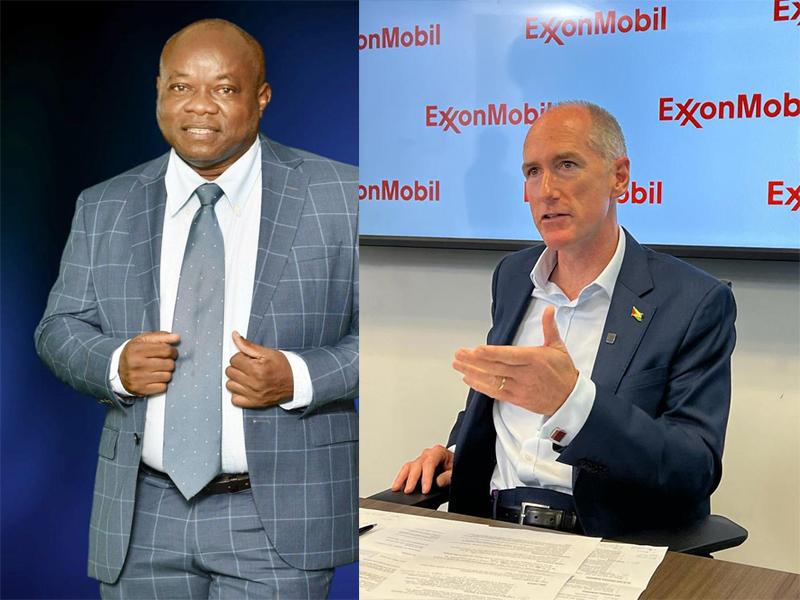
Kaieteur News – President of ExxonMobil Guyana Limited (EMGL), Alistair Routledge on Wednesday said the U.S oil giant is open to discussions with the People’s National Congress Reform (PNCR) on the lopsided oil contract the former APNU/AFC government signed in 2016.
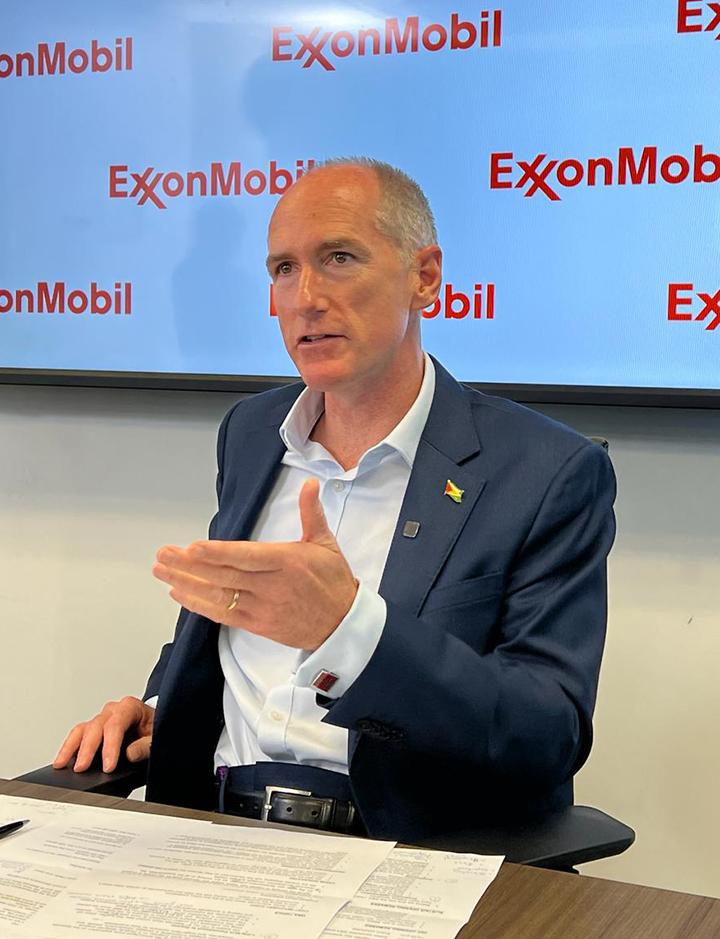
President of ExxonMobil Guyana Limited (EMGL), Alistair Routledge

PNCR Leader, Aubrey Norton
Exxon’s Country Manager was at the time responding to a question from Kaieteur News during a press conference at its Duke Street, Kingston, Georgetown office on the PNCR’s recently revealed plans to engage the company in a top-to-bottom review of the deal.
The Leader of the PNCR, Aubrey Norton at a press conference two weeks ago unveiled the party’s 20-point plan to manage the sector, if successful at the next elections. Norton announced that the party would engage the company for a review of the deal, in a bid to specifically address royalty and ring-fencing, among other key provisions.
In his response, Routledge said, “Yes, so I saw the announcement, I haven’t had the opportunity to meet with anybody from the PNCR since then. We always welcome engagements to look at the agreements to understand the agreements, to understand our operations.” He added that the party does not have regular engagements and insight into the sector; as such, he believes an interest would be there which is welcomed by the oil company.
Not budging
Later in the press conference, he was asked by another reporter if the company has changed its position regarding the possibility of engaging the government in renegotiating the royalty percentages. To this, Routledge said, “No it hasn’t changed but I think what’s important to say is, cause I have seen comments made about Suriname and everyone wants to say ours is better than yours, but at the end of the day this was all the elements that go into an agreement like this- a Production Sharing Agreement.”
He urged that a “step back” should be taken to recognize that the agreement has been very successful for Guyana in attracting investment into a basin where there were no discoveries. In fact, he boasted that it was Exxon that de-risked the area for oil and gas activities in Suriname. “It de-risked the Suriname drilling because discoveries had been made in Guyana by the Stabroek Block Co-Venturers and we can always cherry pick if somebody has higher royalty, or lower royalty, pays this tax or that tax but it’s about the total amount of revenue that’s generated out of the petroleum agreement that’s really important to the country and if you don’t attract sufficient investment, development won’t happen and you won’t have the same scale of revenue,” Routledge said.
Given that the basin has now been de-risked, Kaieteur News asked Routledge whether Exxon does not believe Guyana is now entitled to more of the revenues generated here.
According to him, the investments in the Stabroek Block were made on the basis of the agreement and changes to the contract would undermine the premise of those investments. Further, he noted, “what it starts to do is to raise questions about well can anybody be certain about investing in the future if those numbers might change, so the stability of the basis for investment is very important not just for ExxonMobil and Hess and CNOOC but I would say for anybody wanting to invest in the country…if we start to have uncertainty around the basis of the investment, not just the geologic risk, the execution risk then it really seriously starts to undermine that investment basis.”
Kaieteur News again followed up the response provided, this time asking Routledge to say if the company’s investments would be undermined if Guyana asks for at least 5% royalty. As such, he said, “Absolutely, any change to the investment basis, given that we have made commitments that will flow 20 to 30 years, undermines that investment.”
Another journalist then pointed out that the 2016 PSA provides for renegotiation of the contract terms. He therefore asked Routledge whether he was categorically stating that the company would not agree to invoke the article for renegotiation.
In response, he stated, “We have no interest to invoke that article. As I say we have made US$55B worth of commitment to the country. To go back and to undermine the basis of that basis of that investment would seriously challenge any future investments.”
(ExxonMobil open to discussion on terms of oil contract with PNC/R)