


Govt placing heavy burden on citizens shoulders with US$6B debt – Glenn Lall
Jan 27, 2025
…but Jagdeo says borrowing economically-sound
Kaieteur News- The recent revelation by Guyana’s Minister of Finance, Dr. Ashni Singh that the country’s debt had raised from US$4.5 billion at the end of 2023 to nearly US$6 billion by the end of 2024 has sparked concerns about the government’s borrowing policy.
Some $350 billion or US$1.6 billion is earmarked to fund the 2025 Budget, valued at $1.382 trillion. During the first day of debate, Opposition Members of Parliaments (MP) like Juretha Fernandes and Sherod Duncan, voiced concerns about the country’s growing debt. Prominent businessman, Glenn Lall has also strongly criticised the government’s borrowing practices. He compared the debt burden to a heavy weight on citizens’ shoulders.
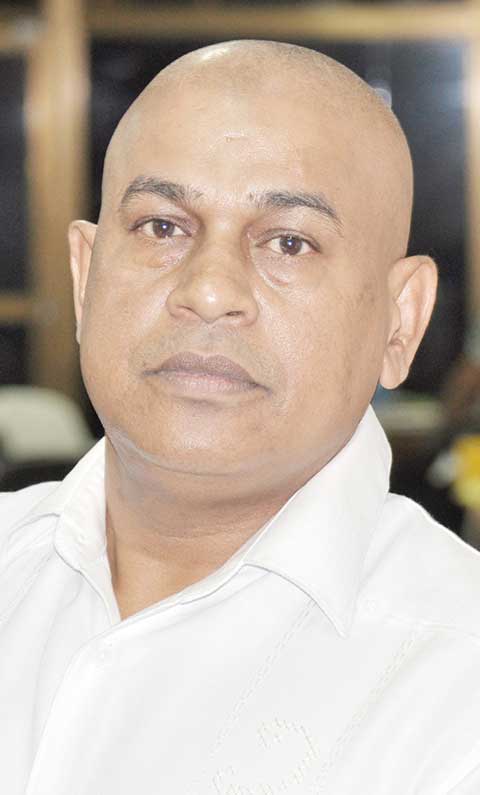
Prominent businessman and Kaieteur News publisher Glenn Lall
Lall stated, “Oil-producing Guyana, rather than removing the burden of debt on its citizens, is tripling the debt onto their shoulders. In 2015, when the PPP left office, Guyana’s national debt stood at US$1.8 billion. The Coalition Government took over until 2020, and during their time in office, the debt remained almost the same – which was a debt of about $500,000 on every Guyanese in the country, man, woman, and child.”
He continued, “Fast forward to 2020, when the PPP returned to office and the oil revenue started flowing. By the end of 2024, Guyana’s national debt skyrocketed to US$6 billion. This was confirmed by Ashni Singh in his 2025 Budget speech. Let’s break that down: in just four years, the debt tripled, and now every Guyanese is carrying the equivalent of G$1.6 million on our shoulders.”
The businessman questioned the government’s use of the oil revenue, which amounted to approximately US$6 billion during the same four-year period.
“Think about that—US$6 billion came into this country from oil, yet the debt still climbed to US$6 billion. Where did that money go? How can this be possible?”
He further argued that the government’s borrowing practices were akin to poor financial management. “Imagine you owe the bank $2 million on your house, paying heavy interest. Then, you start earning three times that amount from the resources on your property. But instead of paying off that loan to free yourself from that burden, you spending out that cash elsewhere and borrowing even more, dragging the family into deeper debts. That is what the PPP is doing to all of us,” Lall remarked.

Vice President Bharrat Jagdeo
Vice President Bharrat Jagdeo, at his last press conference, responded to criticisms and defended the government’s borrowing policy. In his efforts to defend the country’s growing debt, Jagdeo pointed to what he described as country’s improved economic standing under the PPP-administration. “Now the size of the debt, that’s another criticism, ‘Oh PPP is borrowing too much so the debt has grown to nearly $6 billion now US$5.9 billon’. So here are some things that we have to talk about which I’ve spoken about before: Are we leaving the next generation of our country in bankruptcy with an insolvent economy? That is what APNU did,” Jagdeo argued.
He explained the debt-to-GDP ratio under the PPP compared to previous administrations, noting that at the beginning of their term, the debt-to-GDP ratio was 900%. “Our economy today is $25 billion. It is 71 times bigger than it was in the past. So, the external debt-to-GDP in Guyana is 8.8%—down from 700% under APNU. That’s one of the lowest in the world,” he said.
He further stated that external debt is more of a concern given that the country will have to find foreign currency to service that debt. External debt is US$2.2 billion. To this end, the Vice President posited that the US$3.7 billion domestic debt “could easily be repaid.”
Early 2024, the government got the green light to increase the ceilings on both domestic and external debt. The domestic public debt ceiling has been increased to $1.5 trillion, up from $750 billion from its last revision. Meanwhile, a new external borrowing ceiling of $1.5 trillion has been approved, after its last increase to $900 billion. This move was part of a broader financial strategy to increase the nation’s capacity, in order to finance its $1.146 trillion 2024 budget, including several large-scale infrastructure projects.
(Govt placing heavy burden on citizens shoulders with US$6B debt – Glenn Lall)
(Govt placing heavy burden)
Related
Similar Articles