


Guyana rejects Maduro claims on Geneva Agreement interpretation
Apr 09, 2025
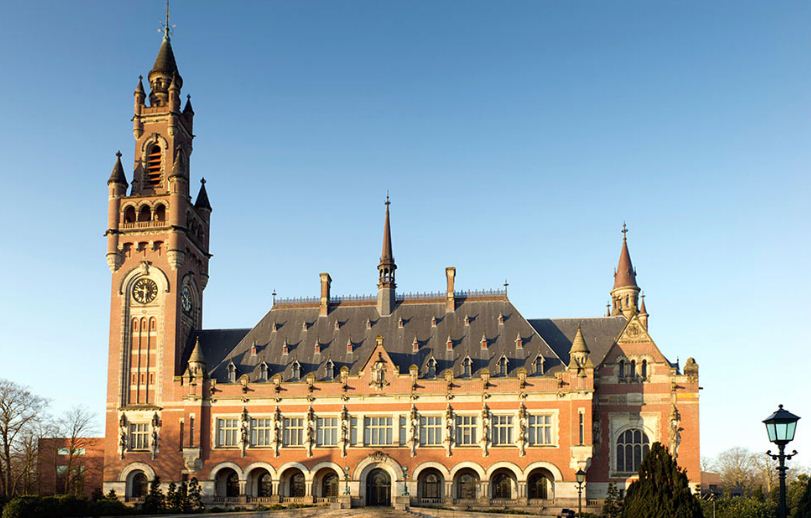
The International Court of Justice
Kaieteur News – The Ministry of Foreign Affairs and International Cooperation has responded to claims by Venezuelan President Nicolás Maduro, regarding the interpretation of the 1966 Geneva Agreement.
In a letter sent to the United Nations Secretary-General on March 19, 2025, Maduro claimed that the “territorial issue of Essequibo, [which] has been dragged into the International Court of Justice without Venezuela’s consent, [is] in open violation of the 1966 Geneva Agreement.”
However, the foreign ministry clarified that that interpretation had already been rejected by the International Court of Justice (ICJ) in a ruling issued on December 18, 2020.
“The fact is this issue has been decided by the world’s highest judicial authority, the International Court of Justice. And it has been decided against Venezuela,” the statement read.
The ministry explained that the 1966 Geneva Agreement provided for diplomatic negotiations to resolve Venezuela’s challenge to the 1899 Arbitral Award, which established the boundary between the two countries with the Essequibo region being part of Guyana. It was explained that when negotiations failed, the agreement allowed for the dispute to be settled through other peaceful means, including judicial settlement, as determined by the UN Secretary-General.
Quoting Article IV(2) of the Agreement, the ministry noted that the parties agreed to refer the matter to the Secretary-General if negotiations failed, “If the means so chosen do not lead to a solution of the controversy, the said organ or, as the case may be, the Secretary-General of the United Nations shall choose another of the means stipulated in Article 33 of the Charter of the United Nations, and so on, until the controversy has been resolved, or until all the means of peaceful settlement there contemplated have been exhausted.”
Following decades of unsuccessful mediation under the Good Offices Process, the UN Secretary-General concluded in 2018 that judicial settlement through the ICJ was the appropriate next step. Guyana then filed its case with the court on March 29, 2018.
In its 2020 judgment, the ICJ confirmed that it had jurisdiction to hear the case. The court found that Venezuela and Guyana “mutually conferred upon the Secretary-General of the United Nations the authority to choose the means of settlement of the controversy.”
It concluded, “It has jurisdiction to entertain the application filed by the Co-operative Republic of Guyana on 29th March, 2018, in so far as it concerns the validity of the Arbitral Award of 3rd October, 1899, and the related question of the definitive settlement of the land boundary dispute.”
Moreover, the ministry criticised the Venezuelan Government for ignoring this judgment in its continued public statements. “President Maduro and his government do not mention the court’s judgment on jurisdiction… when they claim that the Geneva Agreement provides only for diplomatic negotiations, not judicial settlement,” it was noted.
Further, the ministry reiterated Guyana’s commitment to the legal process and noted that Guyana will accept the final judgment of the court. Oral hearings on the merits of the case are expected in the first half of 2026.
Related
Similar Articles