


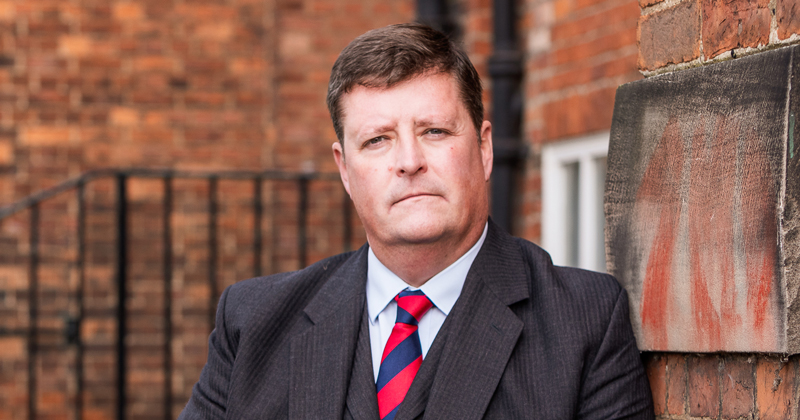
Ofsted chief inspector Sir Martyn Oliver has accused the “most vocal critics” of proposed inspection reforms of seeking a “low-accountability system”, as he insisted report cards “are not and never were going to bring about the end of grading”.
In his keynote address at the Association of School and College Leaders (ASCL) conference in Liverpool on Friday, Oliver urged sector leaders to take part in Ofsted’s ongoing consultation into proposed reforms.
The most vocal critics of the proposed reforms seem to be under the misapprehension that a new low-accountability system is possible
The inspectorate proposes to replace single-phrase judgments with new “fairer” report cards with five grades across at least nine judgment areas. It will also end ungraded inspections and increase monitoring of under-performing schools.
The proposals have been heavily criticised by ASCL, which said the new report cards would be “worse than single-word judgments” which were scrapped last year.
General secretary Pepe D’Iasio said the new system would be “bewildering” for teachers, leaders, and parents, and accused the inspectorate of “devis[ing] an accountability system which will subject a beleaguered profession to yet more misery”.
NAHT general secretary Paul Whiteman said the framework “risks replicating the worst aspects of the current system and will do little to reduce the enormous pressure school leaders are under”.
Criticism ‘seemingly based on misunderstanding’ – Oliver
Addressing leaders on Friday, Oliver said the proposals have been met with some “really encouraging” feedback, along with “a small number of rather surprising responses” which he claimed were “seemingly built on a misunderstanding of what report cards are”.
“The most vocal critics of the proposed reforms seem to be under the misapprehension that a new low-accountability system is possible,” he said.
“It isn’t. Ofsted will always put children and their parents first”.
He said the report cards “are not and never were going to be about less accountability”.
Oliver said the proposed framework will help “move from low quality information and high-stakes inspection to a much richer, more nuanced set of information and sensible, supportive and proportionate accountability”.
He welcomed the DfE’s consultation on accountability which it recently launched, and urged leaders to complete both it and Ofsted’s consultation.
The new report cards will see schools and colleges assessed across nine different judgment areas using a five-scale grading system, from “causing concern” to “exemplary”.
Critics have said the proposal simply rehashes the previous framework, giving teachers more assessment areas rather than reducing pressure.
They also fear the new grading system will be less reliable, and make Ofsted’s “inability to accurately capture the complexity of a school far more apparent”.
‘Some form of grading is necessary’
“I know there are some who want a system without grades,” Oliver told the ASCL conference.
“But Ofsted is not there to just divide schools into those who are meeting a minimum set of standards and those who aren’t.”
He said he wanted “to be clear” that report cards “are not and never were going to bring about the end of grading”.
He said a “met/not met system” would not serve schools, arguing that “even the weakest [have] strengths worth noting, and even the strongest [have] things they needed work on.”
“Our proposed system recognises this complexity. It recognises that you can be doing great work and still have things to improve. And it recognises that you can need to improve but still have things worth celebrating,” he said.
Ofsted’s reforms come after a coroner ruled an inspection contributed to the suicide of headteacher Ruth Perry.
The coroner found that “parts of the Ofsted inspection were conducted in a manner which lacked fairness, respect and sensitivity” and “it was at times rude and intimidating”.
Oliver used his speech on Friday to say Ofsted “want[s] inspection to be a collaborative dialogue on an equal footing”.
“We want you and our inspectors to be able to openly discuss where you are and where you’re heading,” he said.
Ofsted’s consultation is available here.
Samaritans are available 365 days a year. You can reach them on free call number 116 123, email them at jo@samaritans.org or visit www.samaritans.org to find your nearest branch.
Education Support runs a confidential helpline for education staff and teachers – call 08000 562 561.