


By William Ysaguirre (Freelance Writer)
BELIZE CITY, Mon. Aug. 18, 2025
The patriarchal structure of Belizean society that once guided proper parenting has disconnected to a point where the Government of Belize feels obligated to establish a National Parenting Policy to guide parents in how to raise their children properly. A National Parenting Guide was produced in 2017, but community workers feel it needs to be updated to reflect the evidence of children’s present situation.
To determine what the new policy should be, the National Parenting Committee and the National Committee for Families and Children gathered with education officials and representatives of the Department of Youth Services, the Belize Family Life Association, the Young Women’s Christian Association, the National Women’s Commission, Youth Enhancement Services (YES), the United Nations Children Education Fund (UNICEF), the United Nations Population Fund (UNFPA), the Police Department and other agencies serving children in a one-day consultation hosted by the Ministry of Human Development, Family Support, and Gender Affairs at the Best Western Biltmore Hotel on Friday, August 15.
There is strong support from multiple community-based organizations across all six districts to help parents, UNICEF consultant Dr. Olusola Oladeji reports, but their impact is limited because their efforts are fragmented and uncoordinated. These services include the Early Childhood Unit and its Technical Working Group, and schools which offer parenting education. Health centers of the health ministry offer parenting support, and UNICEF supports the ministry’s Care for Child Development program. Similarly, the RESTORE Belize agency mentors scholarship recipients through parenting programs, and the Belize Defence Force educates its soldiers in proper parenting. The parents of children who have come in conflict with the law may also draw on support from the Community Rehabilitation Department. Besides the BFLA and YES, there are many community agencies like Hand in Hand Ministries, Productive Organization for Women in Action (POWA), Pathlight International, and RET International who are there to help. In addition to international agencies like UNICEF, UNFPA, PAHO and civil societies, there are church-based support groups which include His Hands for Belize, Gifts of Hope, and Hand in Hand Ministries.
But the Belizean family unit with two parents has broken down, and the rising numbers of single parent homes have led to 75 percent of Belizean children lacking the stimulus of a father’s nurturing care, and only about 66 percent receive adequate stimulation from their mothers. Only 44 percent of infants and 5-year-olds have books at home. Violent discipline is imposed on 65 percent of children, and six percent may suffer severe punishment. More than half the children 14 years old and younger experience some form of psychological abuse.
Teenage pregnancy remains high, at the rate of 55 of every 1,000 girls aged 15-19 years, and many of these young mothers lack support. The rates in the Corozal, Toledo and Stann Creek districts are higher than the national average. Such single-parent households have financial problems, face economic stress, and their support groups are limited. The enrollment of children in pre-school is less in rural areas at 48 percent, than in the cities and towns – 66 percent. The Cayo District has the lowest rate of pre-school enrollment; only 36 percent of 3 to 4-year-olds are in pre-school.
Dr. Oladeji concluded that Belize has strong institutional foundations, and the interested parties are dedicated to their work. However, a coordinated, national strategy based on the status quo is urgently needed, and parenting support should be integrated across the different sectors. Belize could become regional leader by adapting best practices. If the existing support organizations continue their commitment, forming partnerships will improve the outcome for all families.
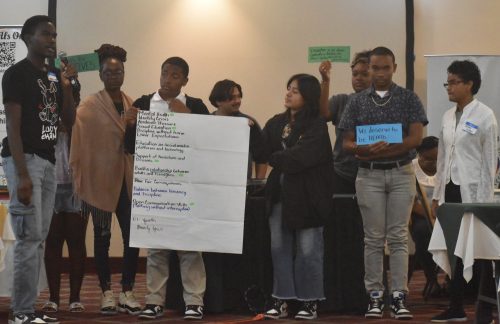
The consultation also heard children’s voices, as several members of the Children’s Parliamentarians Association participated. They asked to be able to talk to their parents, who should listen without interrupting, and that parents strike a balance between discipline and leniency. The teenagers would like to be able to build a relationship with the adults in their lives, who should support their dreams and ambitions. They admitted to needing help with social media platforms, and how technology is shaping teaching methods today.