
The Man Who Distinguished Himself as the Vice-President in Hiding
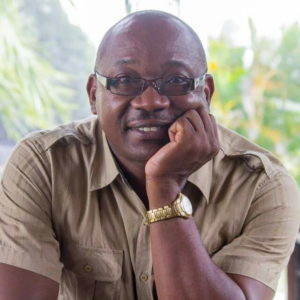
By David L. Dec Bowen JP
Every political era produces its stand-out figures, the reformers, the fighters, the loyalists who stand firm when conditions worsen. And then there are those who perfect a different craft altogether. Michael Lashley distinguished himself not by leadership in adversity, but by disappearance when leadership mattered most.
The office of Vice-President of the Democratic Labour Party was never intended to be symbolic. It was meant to anchor the party in moments of pressure, to provide steadiness when electoral defeat, public criticism, and internal strain converged. Instead, when the party entered its most difficult period, the Vice-President perfected a quieter role, that of the Vice-President in Hiding.
While the Democratic Labour Party faced its harshest scrutiny in a generation, Barbadians searched in vain for his voice. There was no rallying call, no public defense of colleagues, no visible effort to shoulder responsibility. Silence was not accidental; it was consistent. When the party needed leadership from him, it got absence. When it needed courage, it got concealment.
This was not strategic restraint. It was political self-preservation and cowardice. Others stood in the line of fire, absorbed the blows of public anger, and carried the burden of defeat. The Vice-President, meanwhile, ensured that his record remained pristine, untouched by decision, unscarred by accountability, and safely removed from consequence.
Having retreated when the weather turned hostile, he has now conveniently re-emerged on the sunnier side of the political street, ascending into the ranks of the BLP. The journey tells its own story. Loyalty, it seems, was conditional. Principle was negotiable. Survival, however, was non-negotiable.
Barbadians should harbour no illusions that this change of jersey signals a change of character. The behaviour is entirely consistent. When times are hard, he disappears. When power is secure, he resurfaces. The same instinct that kept him silent in opposition will keep him silent in government, especially when difficult questions arise.
If politics is about service, then this record reflects something else entirely: office without burden, title without duty, and presence without responsibility. If leadership is measured by who stands when it is uncomfortable, then this tenure will be remembered for doing precisely the opposite.
In the end, history will judge many harshly for what they said and did. The Vice-President in Hiding will be judged for something far worse, that when leadership was demanded, he chose invisibility, and when accountability loomed, he chose alignment.
Political parties may change. Governments may change.
But the habit of hiding, once perfected, rarely disappears.
And Barbados should expect nothing more, and nothing less, than consistency.
David L. Dec Bowen JP